


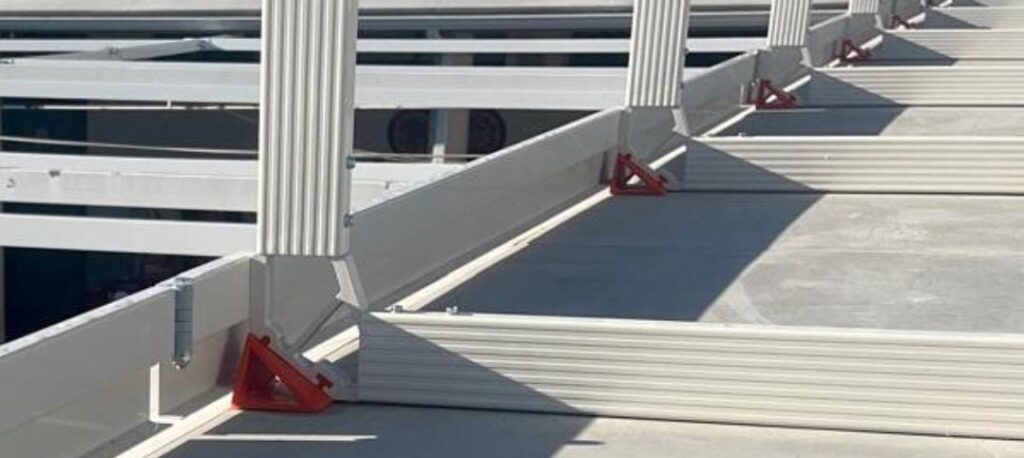
In this post we will talk about the different finishes available on an aluminum safety guardrail for work at height.
When designing or sizing an aluminum safety guardrail to be installed where there is a risk of falling from height, the main focus is usually on the system design, correct and fast installation, system cost and compliance with the standard in force, which in Spain is UNE-EN 14122-3. However, there is one aspect that is often overlooked and that is decisive for the system’s performance over the medium and long term: the surface finish.
The finish is not a decorative element when it comes to fall protection. It is a layer that protects the base material against corrosion, mechanical wear and environmental agents. Choosing the right finish can make the difference between a durable, low-maintenance system and one that requires constant maintenance and has its strength and service life compromised.
This post explains what types of finishes are available for a metal guardrail, although we will focus mainly on aluminum, how they differ, their pros and cons, and why the environmental conditions of the installation site should always be a key factor in the choice.
Is Choosing the Finish of a Guardrail Important?
Although the finish has an immediate visual impact, its main function is to protect the structural material of the aluminum safety guardrail. It acts as a protective barrier against:
- Chemical agents or industrial contaminants
- Corrosive environments
- Moisture and water
- Solar radiation (UV)
- Impacts, scrapes and wear from use
Two guardrails made of the same material, in our case aluminum, can behave completely differently if the finish is not suitable for the environment where they are installed. That is why it is very important to carry out a prior study of the installation site.
Influence on Corrosion, Wear and Maintenance
One of the main causes of deterioration in metal guardrails is corrosion. A poorly chosen finish can cause:
- Premature rust
- Loss of cross-section, which reduces strength
- Coating flaking
- The need for repainting or earlier replacement
- Accelerated corrosion in humid or salty environments
By contrast, a well-chosen finish significantly reduces maintenance tasks, extending the service life of the system and ensuring that the collective protection at height maintains its performance over time.
Direct Relationship with the System’s Service Life
An unsuitable finish does not usually cause an immediate guardrail failure, but it does speed up the system’s aging process. In the medium term, the installation may no longer meet the conditions it was designed for, mainly preventing falls from height, requiring the replacement of some affected elements or of the entire system.
Types of Guardrail Finishes
Natural Finish
Base material with no additional protection. It is the most common finish on aluminum guardrails supplied straight from the manufacturing process.
Advantages:
- Low initial cost
- Technical, industrial look
Disadvantages:
- Very limited corrosion protection
- Not recommended for areas with aggressive environments
- Requires high maintenance if installed in unsuitable areas.
Industrial Paint
Application of one or more coats of liquid paint onto the base material, generally through controlled processes.
Advantages:
- Wide range of colors available
- Improves the system’s appearance
- Additional protection against external agents
- Possibility of architectural integration
Disadvantages:
- Less resistance than other treatments if the coating is damaged
- Requires periodic maintenance
- Sensitive to impacts and scratches
- May peel in aggressive environments
Recommended applications: Situations where the aim is to visually blend the guardrail into a specific architectural setting, with scheduled maintenance.
Powder Coating (Thermoset Coating)
Application of powder, electrostatically (it can also be liquid), which is cured with heat, creating a continuous, durable film.
Advantages:
- Uniform, durable finish
- Wide versatility in the desired RAL color
- Good durability under normal conditions
- Greater resistance than conventional paint
- Lower environmental impact during application
Disadvantages:
- Precise preparation of the material is essential to ensure adhesion.
Recommended applications: Widely used on aluminum guardrails for corporate facilities, since it can be matched to the customer’s desired color.
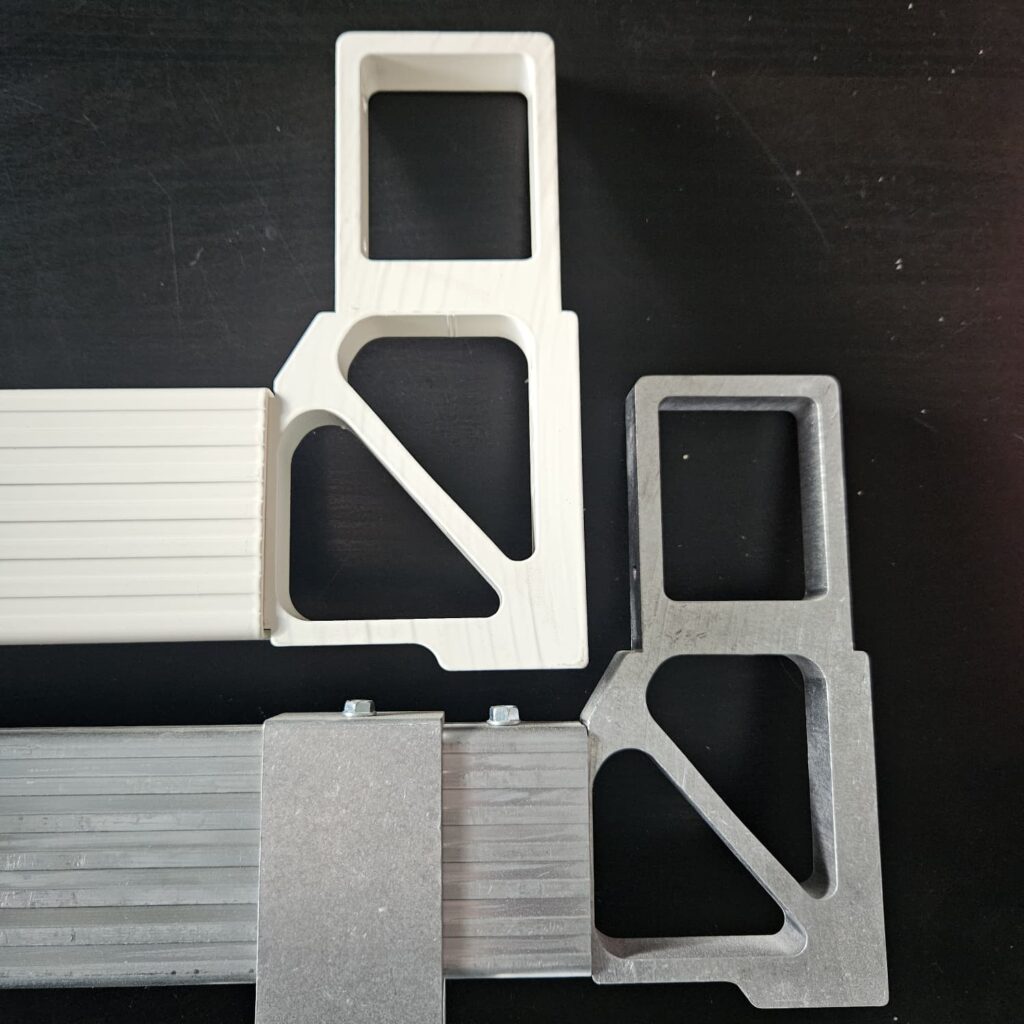
Anodized (Aluminum)
Electrochemical process that creates a layer of aluminum oxide integrated into the material itself, increasing its corrosion resistance.
Advantages:
- Excellent corrosion resistance
- Does not flake or peel off (the layer is part of the material)
- Very low maintenance
- Technical, durable finish
- Good UV resistance
Disadvantages:
- Limited range of available colors
- Higher cost than natural finish
- Process applicable only to aluminum
Recommended applications: Particularly suitable for outdoor use, technical roofs and environments with high exposure to weather.
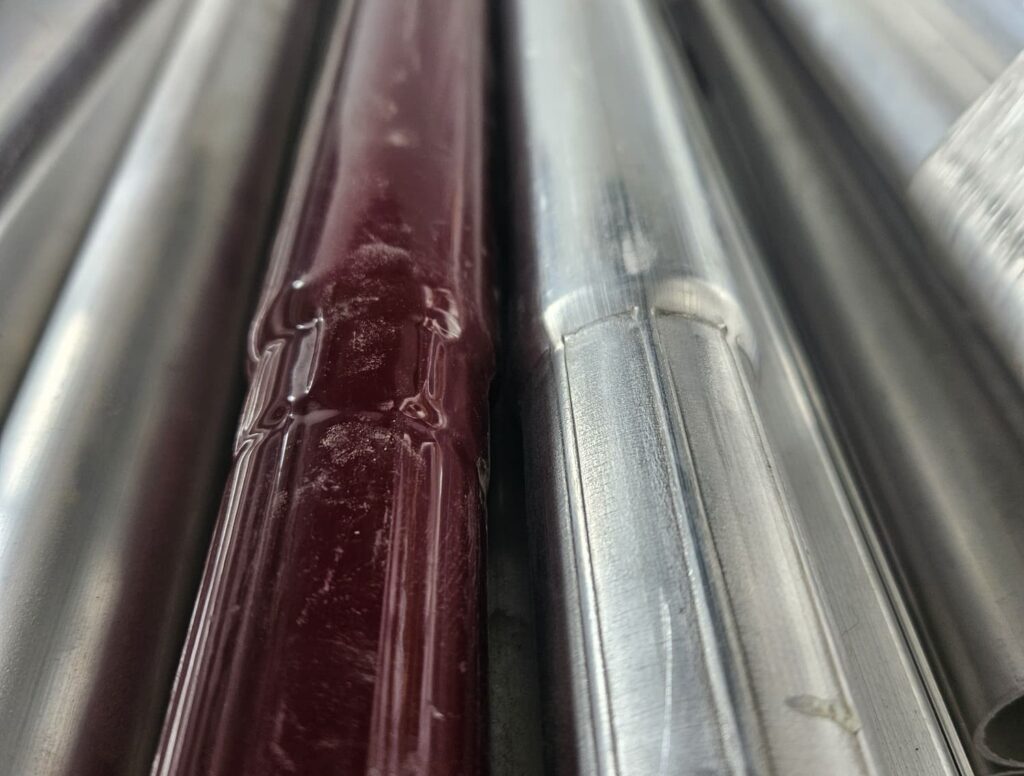
Does the Environment Influence the Choice of Finish?
The answer is clear: the environment is decisive in choosing the finish.
Not all finishes perform the same in every environment. Some examples of selection criteria:
Outdoor roofs: They require finishes that resist solar radiation (UV), rain, thermal changes and condensation. Galvanized, anodized or stainless steel are suitable options. Even so, in most locations the safety guardrail installation has a natural finish.
Industrial environments with chemical agents: There may be corrosive vapors or abrasive particles that degrade certain coatings. Stainless steel or galvanized steel with additional protection are the safest options.
Areas near the coast: Salinity accelerates corrosion. We need highly resistant finishes such as stainless steel, anodized aluminum or hot-dip galvanizing.
Indoor areas: They allow simpler, less demanding solutions, such as powder coating or mill finish.
Conclusion
Finishes on aluminum safety guardrails should not be treated as a secondary detail. They are a key technical element that directly affects the durability, maintenance and long-term behavior of the system.
A correct choice of finish makes it possible to:
- Extend the service life of the protection system
- Reduce corrective maintenance costs
- Ensure that the collective protection maintains its performance over time
- Avoid premature corrosion or structural deterioration
Before deciding which type of finish to choose, it is essential to carry out a technical analysis that considers:
- Environmental conditions at the installation site
- Base material of the guardrail
- Intended use and maintenance frequency
- Expected service life of the system
Only then can we ensure that the guardrail not only fulfills its protective function on day one, but maintains its performance throughout its entire intended service life.
The durability of a protective guardrail system begins with a well-founded technical decision at the design stage.
For any questions, don’t hesitate to contact us.