

Fixed installation for recurring access.
Anchors permanently fixed to the structure, sized at the design stage according to clearance height and number of workers.
We manufacture ZOIS lifelines permanently anchored to the structure: fixed horizontal and vertical systems.
Cable
Rail
Class
Anchors permanently fixed to the structure, sized at the design stage according to clearance height and number of workers.
— Our systems
In our catalog we offer different solutions depending on the type of anchor, the substrate it is anchored to, and whether it is temporary or permanent.
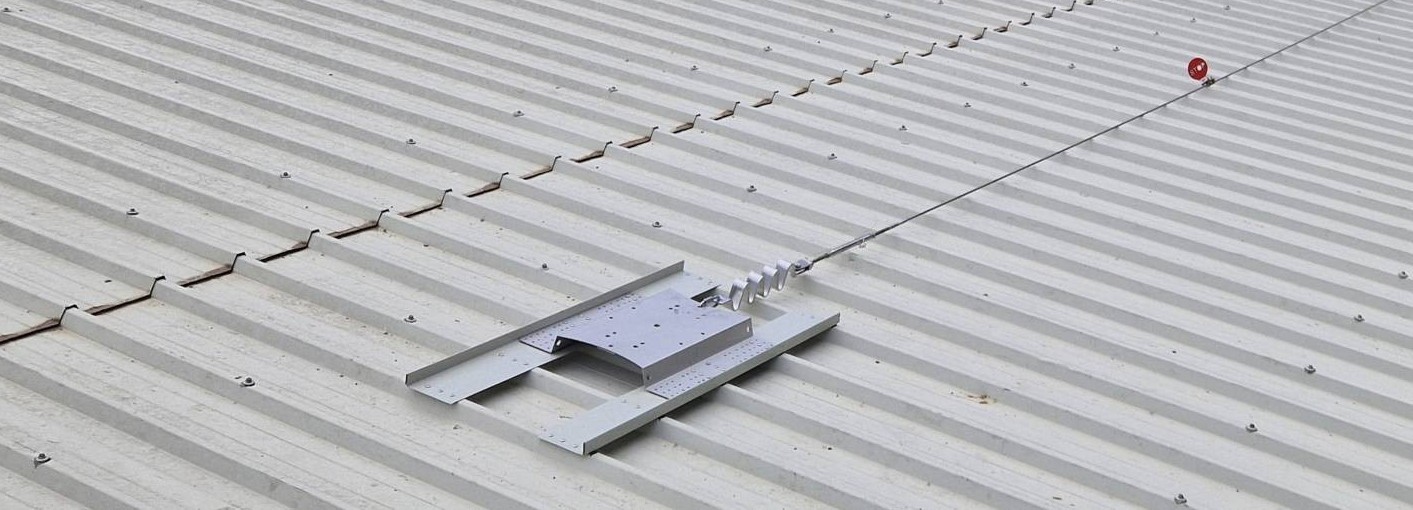
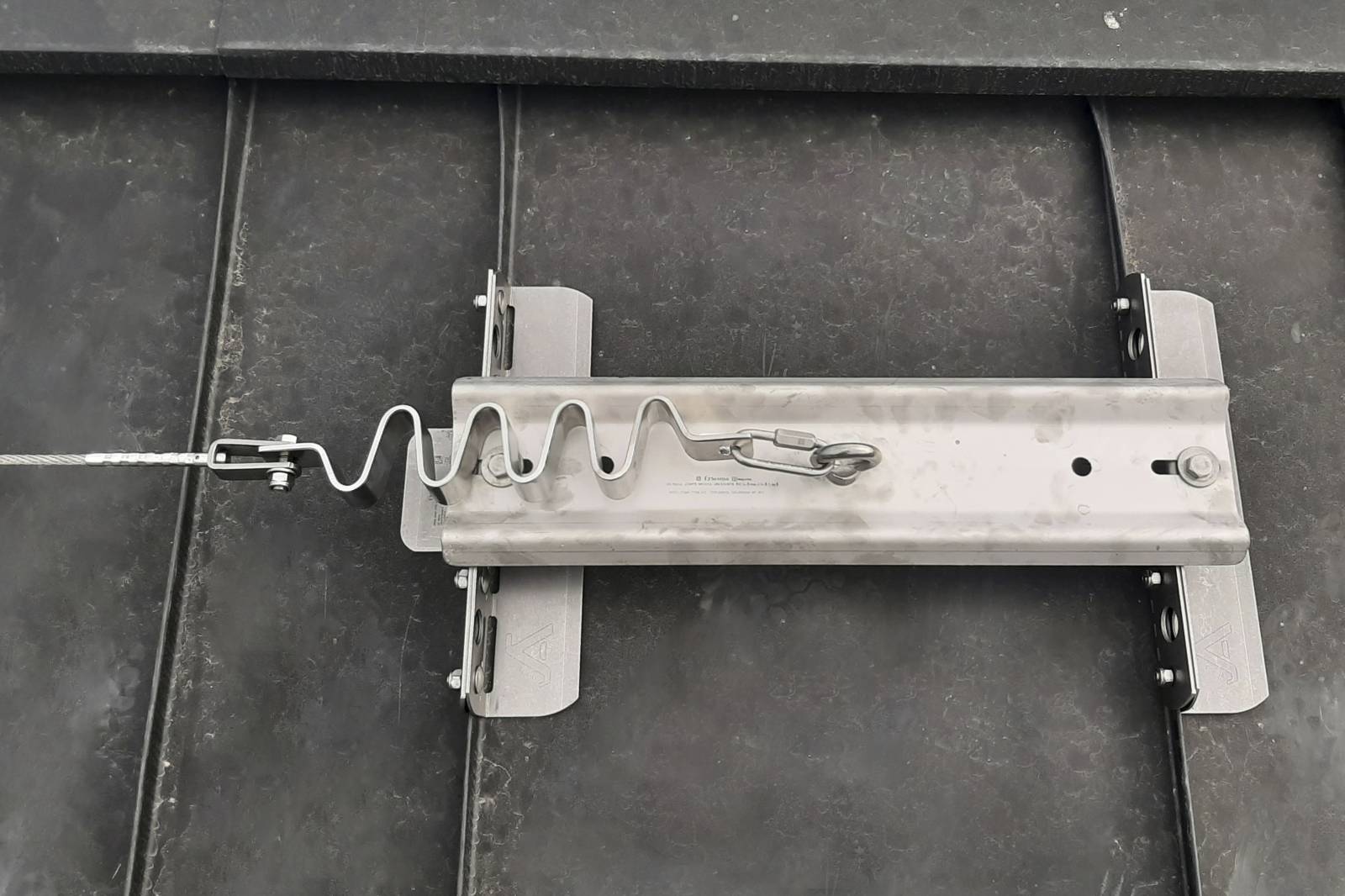
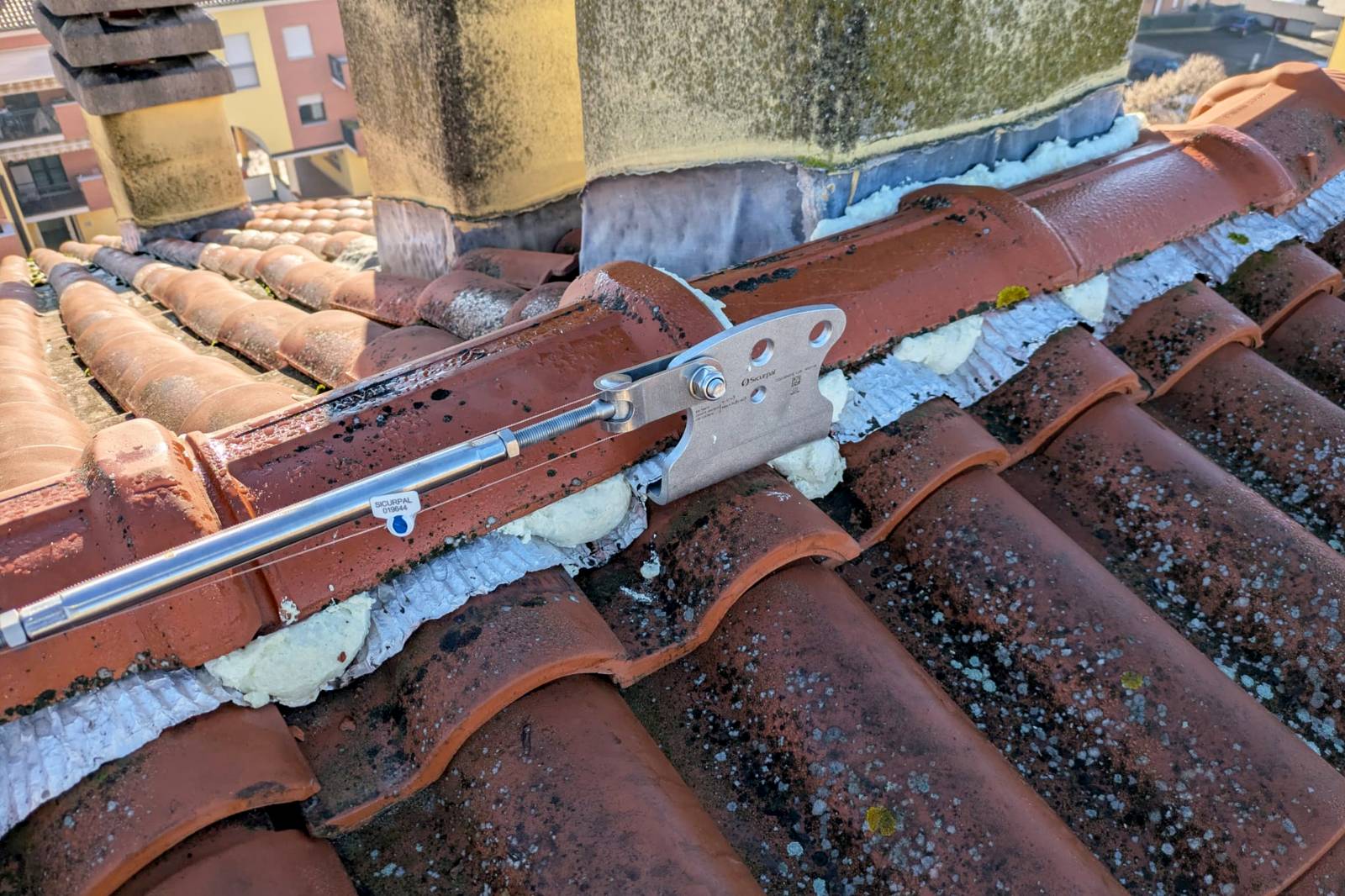
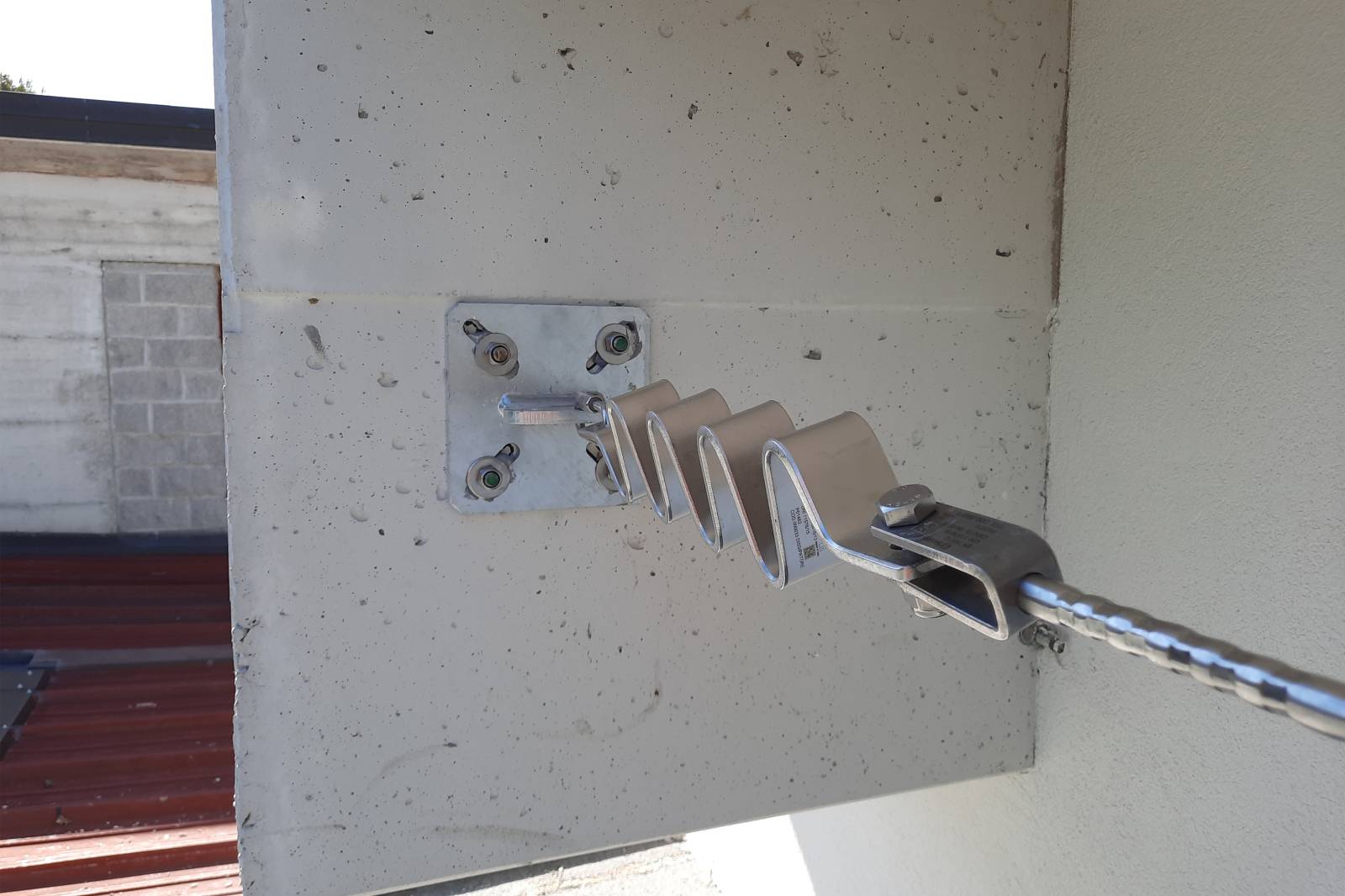
— CONFIGURATIONS
The system is chosen depending on the anchoring surface and the direction of the installation, horizontal or vertical.
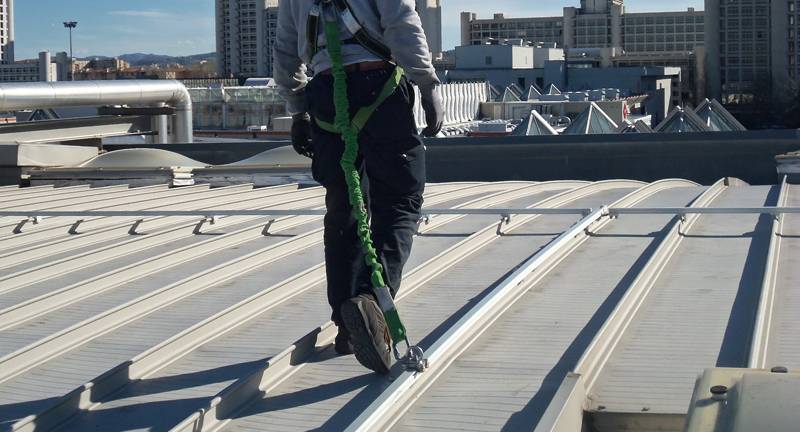
It can be a stainless steel cable tensioned between end posts, with continuous-passage intermediate anchors that let the worker travel the entire route without disconnecting (UNE-EN 795 type C), or, if the available fall distance is limited, a rigid aluminum rail is used, which barely deforms (UNE-EN 795 Type D).
It protects the climb on a fixed ladder, tower, silo, or industrial structure. The anchor line (tensioned cable or rail) is installed along the ladder, and a sliding device accompanies the worker during the climb, allowing hands-free climbing.
All of our production takes place in Spain. This allows us to control quality, offer tight lead times, and customize any project without extra costs.
Quote response
Shipping after quote acceptance
— Components
Lifeline anchors are essential for ensuring the system works, since they transmit the loads to the structure. For this reason, their selection must always be adapted to the type of substrate and the characteristics of the structure.
01 / COMPONENT
End, intermediate, and corner posts, with a base plate sized according to the substrate.
02/ COMPONENT
Fixing anchors for concrete, steel profile, trapezoidal metal sheet, sandwich panel, deck roof, and parapet.
03/ COMPONENT
Energy absorber, tensioner with tension indicator, and terminals.
04/ COMPONENT
Trolley or sliding device with continuous passage.
05 / DOCUMENTATION
System identification plate and logbook.
— QUOTE
Tell us the type of roof, the planned route, and the available clearance height. We will send you a sized proposal with the ZOIS system best suited to your project.
Mon–Fri · 7:00 AM to 3:00 PM · Direct technical support
We will reply within 24 business hours.
The price is not calculated per linear meter, but by the number of anchor points, type of substrate, and system configuration. A straight run on concrete with two end anchors and a few intermediate ones has a very different cost from a curved route on trapezoidal metal sheet, where each fastening requires a load distribution plate. The load-bearing element also matters: rigid rail costs more than steel cable, but it is mandatory when the clearance height below the working plane cannot accommodate the cable sag. For a reliable figure, we need the layout and the roof type.
EN 365 requires a periodic inspection at least every twelve months, carried out by a competent person and documented in the system logbook. In addition, any component that has been involved in arresting a fall is inspected before being used again, and in many cases it is retired. The inspection checks line tension, the condition of the cable or rail, the integrity of the anchors, corrosion, and the legibility of the identification plate. That record is proof that the installation remains valid.
A fixed lifeline is a system permanently installed on the structure. Its anchors are fastened to the substrate (concrete, sheet metal, parapet, or other structural elements) and the cable or rail remains installed and ready for use. This way, the worker does not have to set up the system before each intervention or carry out a temporary installation. Use is simpler, since the worker only needs to connect their protection device to the lifeline.
The criterion for choosing between a permanent and a temporary system can be summed up in two aspects: frequency of use and planning.
If access to the risk area is recurring, for example, for maintenance of HVAC, extraction, photovoltaic installations, or skylight inspection, a permanent lifeline may be more cost-effective in the medium term, especially when the interventions repeat over the years. If, on the other hand, access is one-off and is not expected to happen again, a temporary system may be enough.
There is also a second criterion, key at the design stage: the permanent lifeline is designed with the structure in mind from the start. This makes it possible to define the anchor points in areas with sufficient structural capacity, rather than adapting the system to the available points. The temporary system, by contrast, has to adapt to a structure that already exists.
Anchor devices are governed by UNE-EN 795, type C for horizontal flexible cable lines and type D for horizontal rigid rail. Vertical systems are governed by UNE-EN 353-1. When the line allows several workers to be anchored at the same time, the reference framework is the technical specification CEN/TS 16415, which extends testing to multi-user use.
Our systems are tested in an independent laboratory. With each installation we provide a declaration of conformity, an installation and user manual, a data sheet, and the system logbook. This documentation may be required in tender processes, inspections, or reviews of the safety plan by the property owner.
A permanent lifeline needs periodic maintenance throughout its service life. UNE-EN 365 requires a periodic inspection at least every twelve months, in addition to the mandatory inspection after any fall arrest. Tension, the condition of the cable or rail, the integrity of the anchors, corrosion, and the legibility of the identification plate are checked, and everything is recorded.
Stainless steel has no declared expiration date, but it does have retirement conditions. The PPE that connects to the system (harness, lanyard, connectors) does have a service life set by its manufacturer.