

Certified lifelines
Ypsos distributes the ZOIS range in Spain, with the technical documentation your project will require.
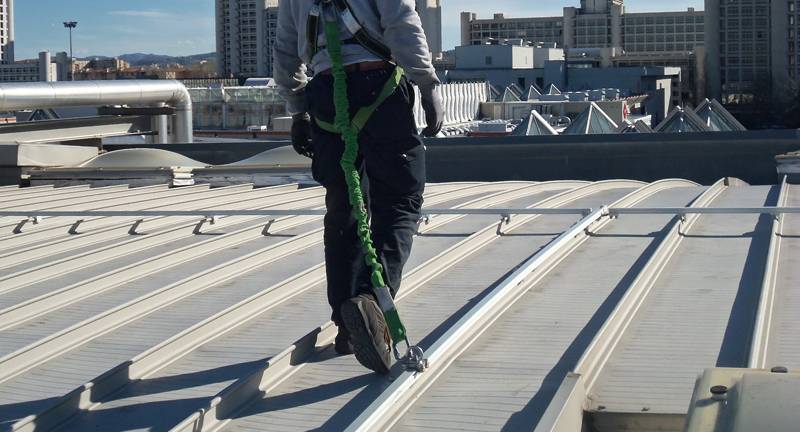
There are roofs where a perimeter guardrail is not feasible, because of the structure or because the project does not allow a visible element on the facade. The ZOIS horizontal lifeline solves that stretch: a continuous anchor in stainless steel cable or aluminum rail that follows the work route and stops the fall before it becomes a free fall. Ypsos distributes the ZOIS range in Spain, with the technical documentation your project will require.
Cable
Class
Ypsos distributes the ZOIS range in Spain, with the technical documentation your project will require.
— Our systems
In our catalog we offer different solutions depending on the type of anchor, the substrate it is anchored to, and whether it is temporary or permanent.
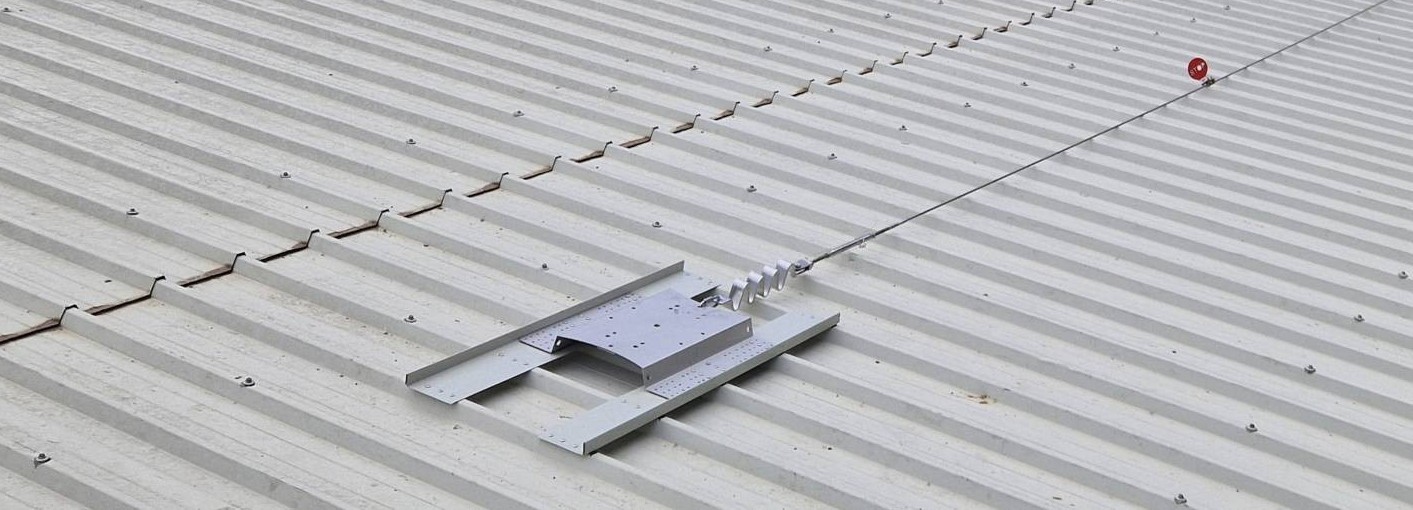
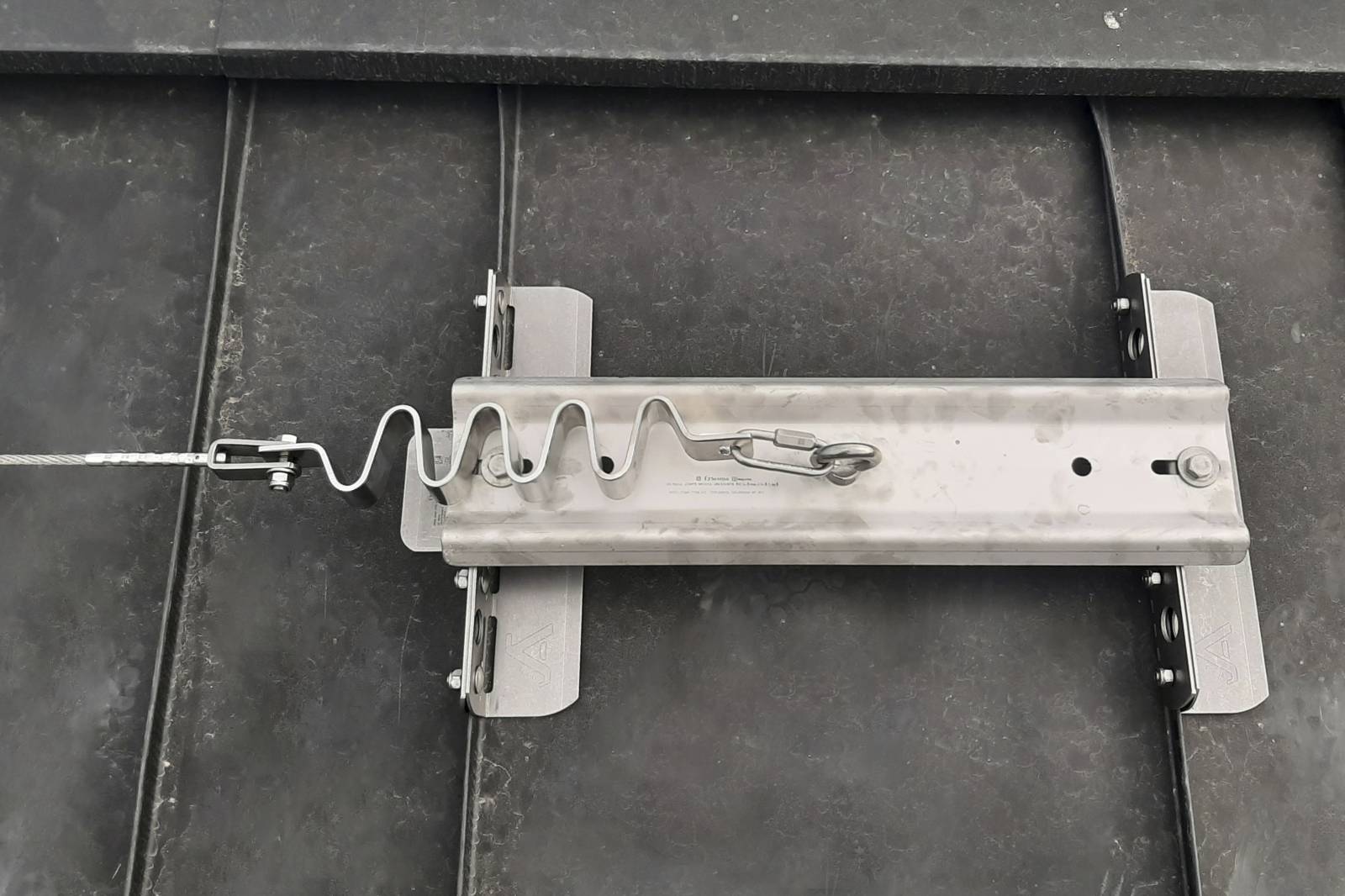
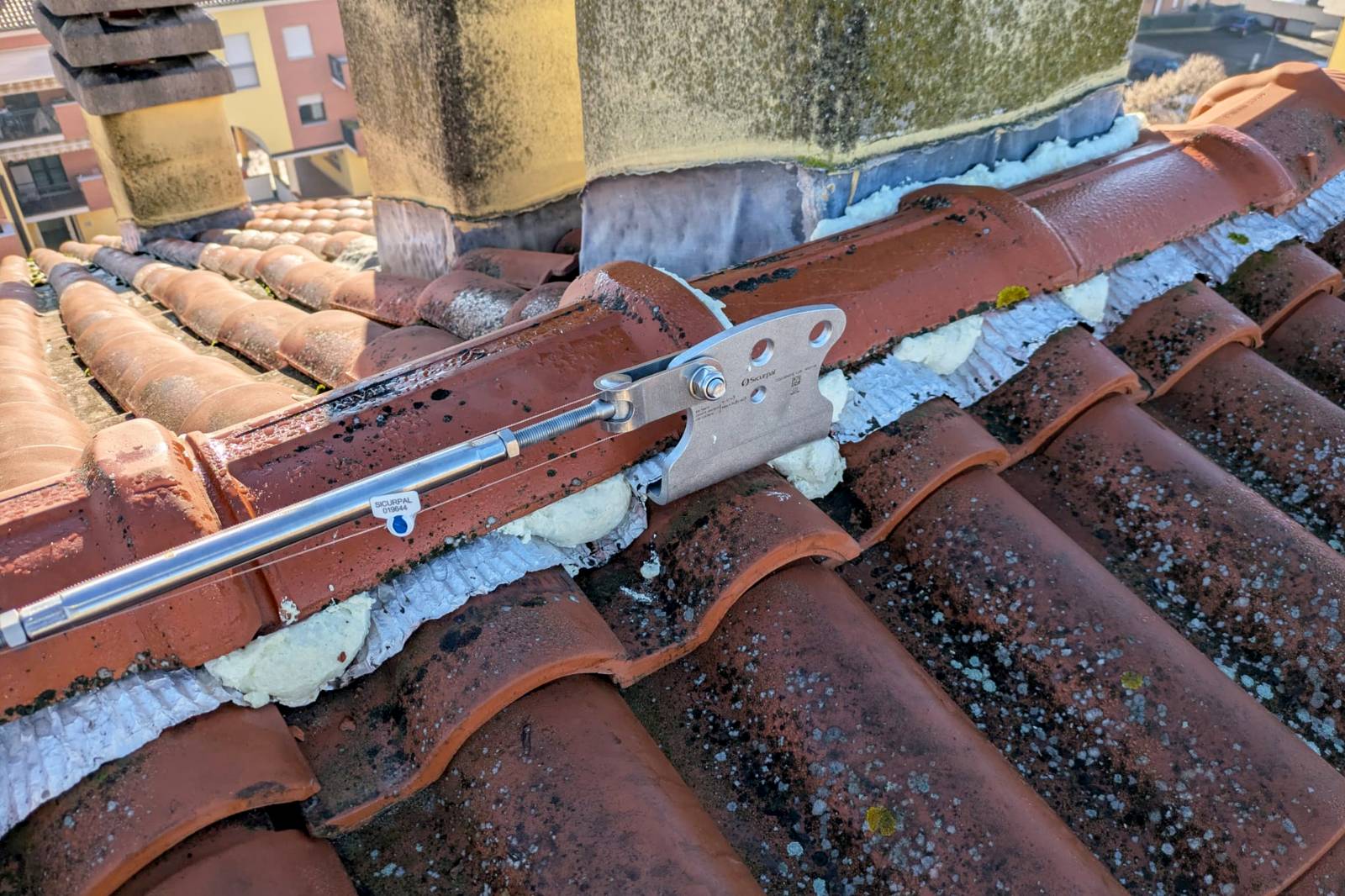
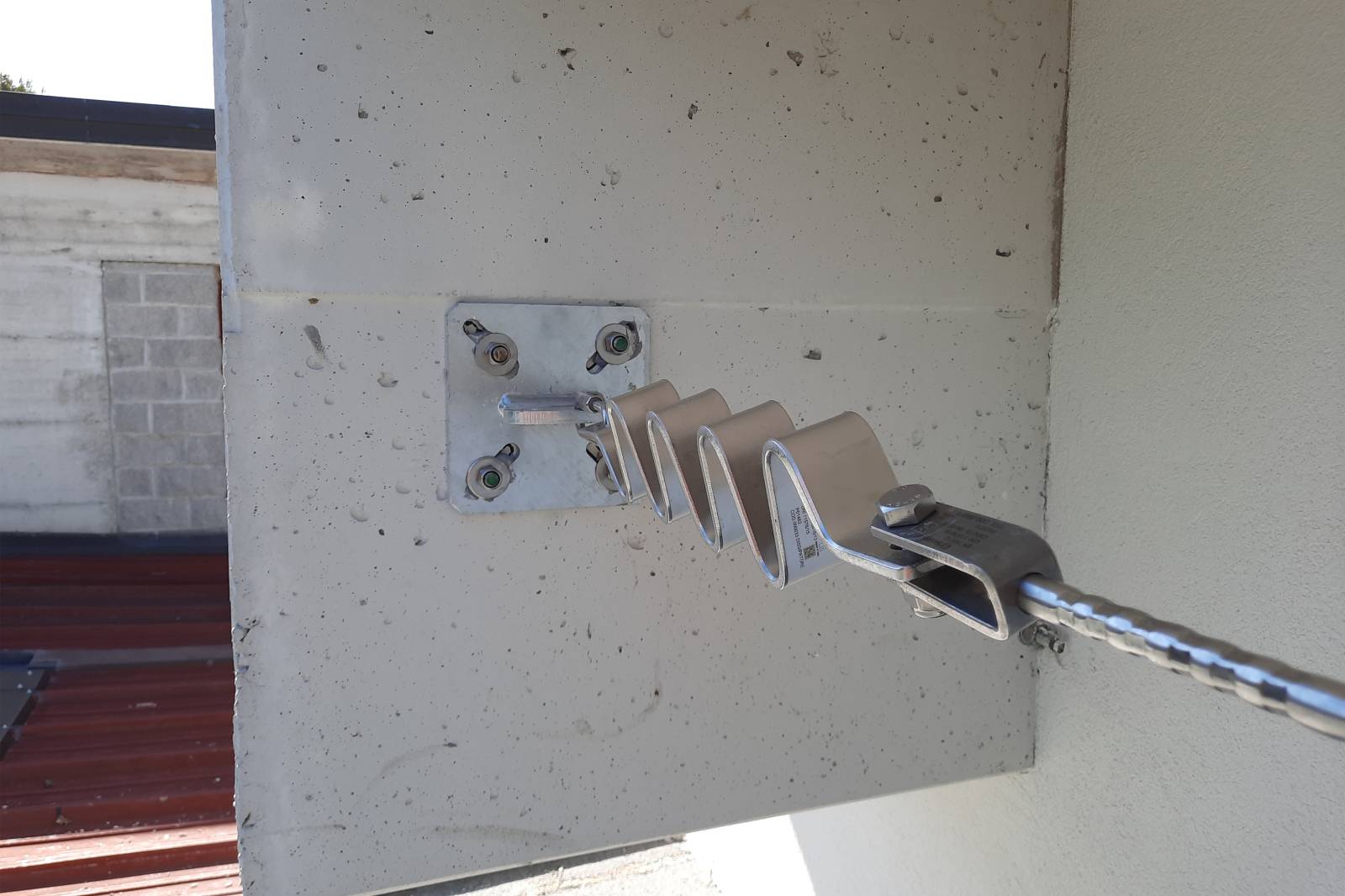
— USES AND APPLICATION
The system is not chosen from a catalog; it is chosen by what is beneath the anchor. The same line, on two different substrates, requires two different fastenings.
Industrial roofs of sheet metal, sandwich panel, deck, or fiber cement, with maintenance traffic. Logistics warehouses and shopping centers, for access to HVAC and extraction equipment.
Rooftop photovoltaic installations, where the route between modules requires continuous travel. Telecommunications towers and wind turbines.
Steel structures, overhead cranes, and technical walkways. Access to elevated machinery and confined spaces with a risk of falling.
All of our production takes place in Spain. This allows us to control quality, offer tight lead times, and customize any project without extra costs.
Quote response
Shipping after quote acceptance
— How we work
We supply the complete system, not loose parts that then don’t fit together. An Ypsos horizontal lifeline kit includes:
01 / ANCHORS
According to the planned layout along the roof route.
02 / LOAD-BEARING LINE
Stainless steel cable of the calculated cross-section, or aluminum rail, depending on whether UNE-EN 795 C or UNE-EN 795 D is chosen.
03 / ABSORBER
Limits the force transmitted to the structure and the user in the event of a fall.
04 / ADJUSTMENT
They maintain the correct tension of the line along the route.
05 / CONNECTION
Continuous passage, with no need to disconnect at intermediate anchors.
06 / DOCUMENTATION
System identification and logbook for periodic inspections.
— QUOTE
Tell us the type of roof, the planned route, and the available clearance height. We will send you a sized proposal with the ZOIS system best suited to your project.
Mon–Fri · 7:00 AM to 3:00 PM · Direct technical support
We will reply within 24 business hours.
It is a continuous anchor system, in steel cable or rigid rail, installed on a surface so that the worker can move while attached along the entire route during work at height. It connects to the harness through a lanyard with an energy absorber. It does not prevent a trip: it stops the fall and limits the force transmitted to the body and the structure. It is installed when perimeter collective protection is not feasible or as a complement to it.
It must be designed and tested in accordance with UNE-EN 795, in its type C (flexible cable line) or type D (rigid rail), with a declaration of conformity and an installation and user manual. If it will be used by several workers at the same time, it must also demonstrate multi-user testing according to CEN/TS 16415. The anchor must be fixed to a substrate with verified structural capacity, and the system requires a prior calculation of the available fall distance beneath the route. Once installed, it requires periodic inspection (at least annually in accordance with UNE-EN 365) and inspection after any fall event, with documented records of each action.
A permanent horizontal lifeline is a stable installation, sized at the design stage and subject to periodic inspections. It is anchored to the load-bearing structure (concrete, steel profile, trapezoidal metal sheet, sandwich panel, or parapet) and follows the actual work route: the path to the HVAC equipment, maintenance of a photovoltaic installation, inspection of a skylight.
By contrast, the temporary horizontal lifeline or portable one covers one-off interventions: a construction site under way, a specific repair, an installation lasting weeks. It is set up, used, and removed. Its logic is different and so is its sizing, because the anchor point you attach it to is not always designed for that purpose.
Within the fixed horizontal lifeline, the standard distinguishes two families.
This is the most widespread configuration. The load-bearing element is a stainless or galvanized steel cable tensioned between one end anchor and another, with intermediate anchors that allow the trolley to pass continuously without disconnecting.
Steel cable for a horizontal lifeline allows curves and changes of direction, which makes it ideal on roofs with an irregular layout. Its critical point is the sag: under load, the cable deforms and that deformation adds to the fall distance. That is why the calculation is not optional. Before sizing the fall arrest system, we need to know the clearance height beneath the roof, the spacing between posts, and the number of users who will be anchored at the same time.
Here the load-bearing element is not a cable but an aluminum rail, on which a sliding trolley with mandatory connection runs. Deformation under load is minimal, so the fall distance is noticeably reduced. It is the solution when clearance height is limited (low-span buildings, mezzanines, technical walkways) or when the worker works in suspension and needs an anchor point that will not give way.
The rail also holds up better in environments with intensive use cycles, where a steel cable would eventually show fatigue.
The horizontal lifeline anchor is the component that decides whether the whole assembly works. It is not chosen from a catalog; it is chosen by the substrate: a plate bolted to a steel profile does not transmit load the same way as a chemical anchor in concrete or a fastening on thin trapezoidal metal sheet.
We manufacture and supply structural anchors for every surface, end and corner posts, terminals, tensioners, absorbers, and all the horizontal lifeline accessories the system requires. If your project calls for a non-standard configuration, we solve it from our workshop.
One note worth keeping in mind: the lifeline is only half of the assembly. It needs the PPE that connects to it (harness, lanyard with absorber, connectors), and that equipment has its own service life and its own inspection schedule.
Anchor devices are governed by the UNE-EN 795 standard, which sets the design requirements and the tests that each type must pass. Type C corresponds to devices with a flexible horizontal anchor line; type D, to those with a rigid horizontal rail. Both are designed for one user. When the system is intended for several workers anchored simultaneously, the reference framework is the technical specification CEN/TS 16415, which extends testing to multi-user use.
The sliding fall arrester that runs on the line also adds UNE-EN 353-1 when the anchor line is rigid.
The certification of our systems is backed by tests carried out by an independent laboratory. That is the difference between claiming that a product complies and being able to prove it with an external report. With each installation we provide a declaration of conformity, an installation and user manual, a data sheet, and a logbook. That documentation is what backs you up in an inspection, a tender, or with the property owner.