


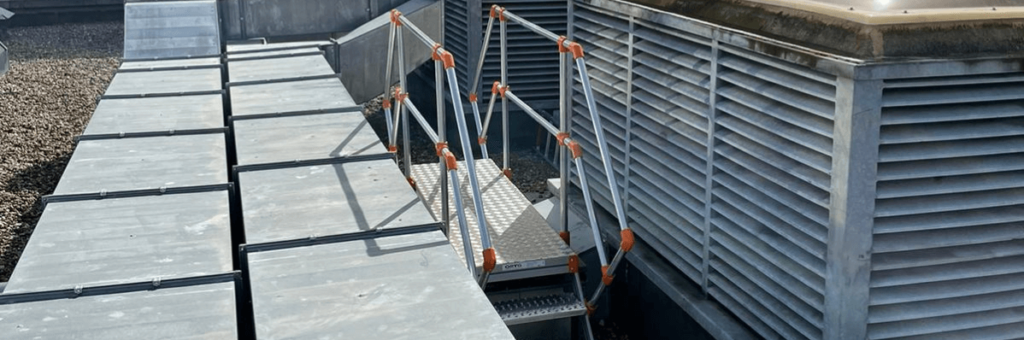
In previous posts we talked about how to install crossovers. Today we will look at the different locations where these safety systems are found.
What Are Crossovers?
Let’s remember that crossovers are an effective solution for ensuring worker safety when getting over obstacles, both indoors and outdoors.
These systems allow workers to pass safely over elements found at various locations that cannot be removed. These may be pipes, walls, or other elements that hinder safe passage and therefore pose a risk to workers.
This is why these safety systems are manufactured: thanks to their modular construction, they can be adapted to the many situations we may encounter on roofs as well as inside industrial facilities.
Installing Crossovers Outdoors
Outdoors, crossovers are usually located on roofs and rooftops, places where it is very common to find obstacles that block access to work areas where operators have to carry out installation, supervision, or maintenance tasks.
The UNE EN ISO 14122-2 standard sets out the requirements for the manufacture and design of these safety elements, especially regarding slip-resistant materials, weather resistance, and optimal protection, since, being exposed to the elements, it is common for items or substances that can cause slips, such as ice and dirt, to build up.
To that end, the standard sets out requirements for the material used in their manufacture, with particular emphasis on the surfaces used for steps and walkways, which must have a recommended slip-resistance rating depending on the situation we will face during installation.
Roofs can present different obstacles, such as:
- Walls
- Ventilation ducts
- Solar panels
- Pipes
- Architectural obstacles
- Level differences between buildings
In all of these situations, crossovers ensure that, in work areas where these elements may be present and traffic is heavy, users have the safety they need, thereby preventing possible falls and the resulting accidents.
For each type of situation, the appropriate data must be collected to assess the risk and make the right decision on the type of crossover, the materials to use, and the characteristics to consider in its manufacture.
Installing Crossovers Indoors
When we have to carry out an installation indoors, it is common for these installations to be in industrial facilities.
Within industrial facilities, crossovers are usually designed to get over machinery, tanks, or conveyor belts. Their modular design allows us to adapt these safety elements to any situation we may encounter.
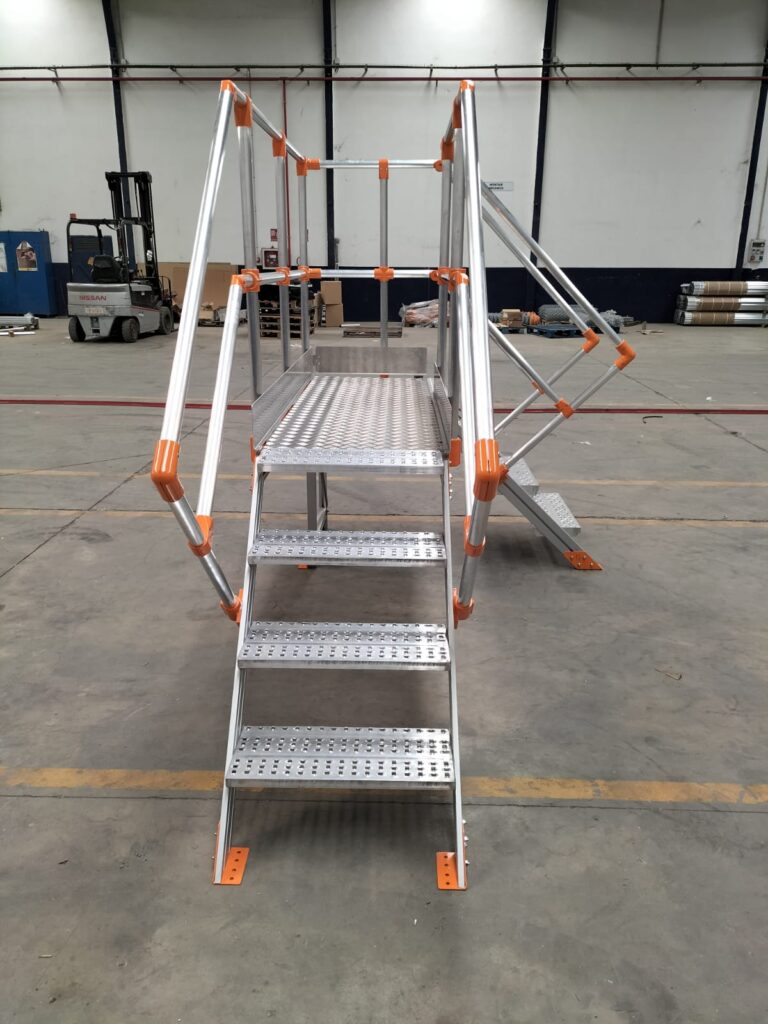
Regarding installation locations, it is worth paying attention to a few key points that will help us give our safety system the right shape:
- Machinery and equipment: In these cases, crossovers must be installed so that they do not interfere with the operation or maintenance of the machinery, making sure that the installation does not create any hazard.
- Tanks and silos: Because of their large volumes, these structures usually require walkways that provide access to their maintenance and supervision areas.
- Conveyor belts: The crossover should be routed over the belts so as not to interrupt their operation.
As we can see, many situations can call for the installation of crossovers. Some manufacturers have more standardized products aimed at handling the most common day-to-day situations, but it is common to find facilities that require custom fabrication. As we always point out, it is important to pay attention to each manufacturer’s particular specifications for these products.