


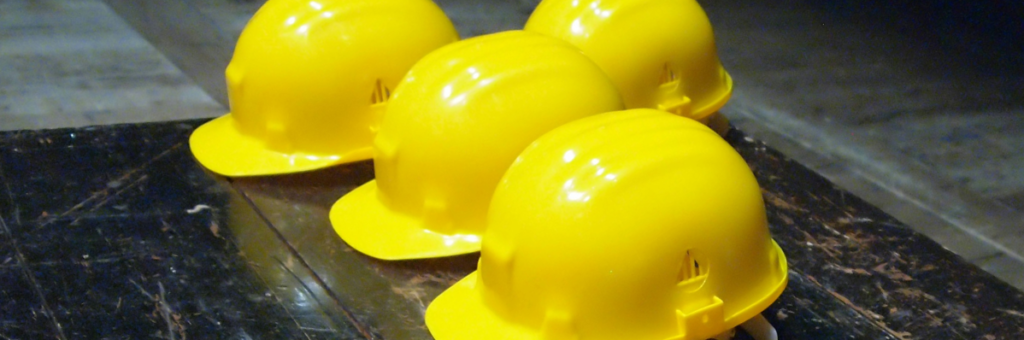
In this post we will address the regulations applicable to the personal protective equipment (PPE) that workers must use in their jobs.
Applicable Legislative Framework for Personal Protective Equipment
Law 31/1995
As we all know, Law 31/1995, of November 8, on Occupational Risk Prevention, establishes the basic framework of guarantees and responsibilities necessary to ensure an adequate level of health protection for workers against the risks arising from working conditions, within the context of a coherent, coordinated, and effective policy.
In its Article 6, it establishes that implementing regulations will define the preventive measures to be adopted in more detailed and technical terms.
In this sense, it is the implementing regulations that are responsible for setting the minimum measures that must be implemented to ensure adequate protection of workers.
These include the provisions that seek to ensure the use of personal protective equipment, which must protect workers against risks that cannot be eliminated or sufficiently limited through collective protection measures or proper work organization.
Convention 155 of the International Labour Organization (ILO)
Similarly, Convention 155 of the International Labour Organization (ILO), ratified by Spain on July 26, 1985, establishes in Article 16.3 that employers are responsible for providing their workers with suitable protective clothing and equipment to prevent accidents or adverse effects on their health.
At the European level, general criteria for safety and health in the workplace have been established through the EU Directives, with specific measures for protection against accidents and occupational hazards.
In particular, Directive 89/656/EEC of November 30, 1989 sets out the minimum requirements for the use of personal protective equipment by workers.
Royal Decree 773/1997
Royal Decree 773/1997 is the regulation that transposes Directive 89/656/EEC into Spanish law.
This Royal Decree has been amended several times over the years, the most important change being the repeal of Directive 89/656/EEC on April 21, 2018, with the publication of Regulation (EU) 2016/425 of the European Parliament and of the Council on personal protective equipment.
The most significant change brought by the repeal of the directive and the entry into force of the European Regulation lies in the legal nature of the legislation: a regulation applies directly in all EU member states, unlike directives, which must be transposed into national law.
Royal Decree 1076/2021 was responsible for adapting Royal Decree 773/1997 to this new regulatory framework.

What Changes Does Regulation (EU) 2016/425 Introduce?
Regulation (EU) 2016/425 has two main objectives: on the one hand, it sets out the requirements for the design and manufacture of personal protective equipment and, on the other, it ensures the safety and health of the people who use it, in addition to authorizing its marketing and use in the EU.
This regulation is also aligned with the broader legislative framework established by Decision 768/2008/EC and Regulation (EC) 765/2008, whose purpose is to remove barriers to the free movement of products within the EU while maintaining the necessary levels of safety and health.
In addition, the Regulation introduces important changes, such as:
- The inclusion of PPE designed for private use, such as equipment intended to protect against heat.
- The reclassification of some product categories.
- The obligation for manufacturers to provide the EU declaration of conformity for each item of equipment, or to indicate where it can be downloaded.
These changes have been incorporated into Royal Decree 773/1997 through Royal Decree 1076/2021 in order to ensure consistency with European legislation.
Royal Decree 773/1997
RD 773/1997, of May 30, aims to establish the minimum safety and health requirements for the selection, use, and maintenance of personal protective equipment.
It covers any equipment designed to be worn or held by workers in order to protect their safety or health against risks that cannot be avoided in any other way.
The Royal Decree also introduces important changes to ensure harmonization with European standards, avoiding contradictions between the manufacturing and use regulations for PPE. With this amendment, the content of the annexes is brought into line with European legislation, in particular with Commission Directive (EU) 2019/1832 of October 24, 2019.
The new annexes of the Royal Decree include:
- Annex I: An indicative outline of the risks associated with the different parts of the body that can be protected by PPE.
- Annex II: A non-exhaustive list of the types of personal protective equipment according to the risks they protect against.
- Annex III: A list of activities and sectors that may require the use of PPE.
In summary, we have reviewed the legislative framework that regulates the manufacture, marketing, and use of personal protective equipment.
In upcoming posts, we will go into the specifics of RD 773/1997 and its implementation, looking in detail at the PPE required for work at height.
As always, if you have any questions, please contact our technical department.