


As we discussed in previous posts, UNE EN 795 sets out the technical requirements for the different anchor systems used for fall protection from a different level, distinguishing them by type:
- Type A: Anchor with one or more fixing points that attach them to a structure.
- Type B: Temporary and mobile anchor devices.
- Type C: Flexible, temporary anchor for horizontal use.
- Type D: Rigid anchor device
- Type E: Temporary, transportable deadweight anchor.
Today we will focus on type B devices, anchor devices that are temporary and also transportable. We will look at their characteristics, technical requirements, applicable regulations, and best practices for their use, installation, inspection, and maintenance.
Temporary Anchor Devices
Type B anchor devices are temporary, portable protective equipment designed to anchor fall arrest systems. Their portability allows them to be installed and removed without damaging the surfaces or structures where they are placed, unlike permanent devices (type A).
This type of device is mainly used in situations where permanent anchors are not available or where user mobility is a key factor.
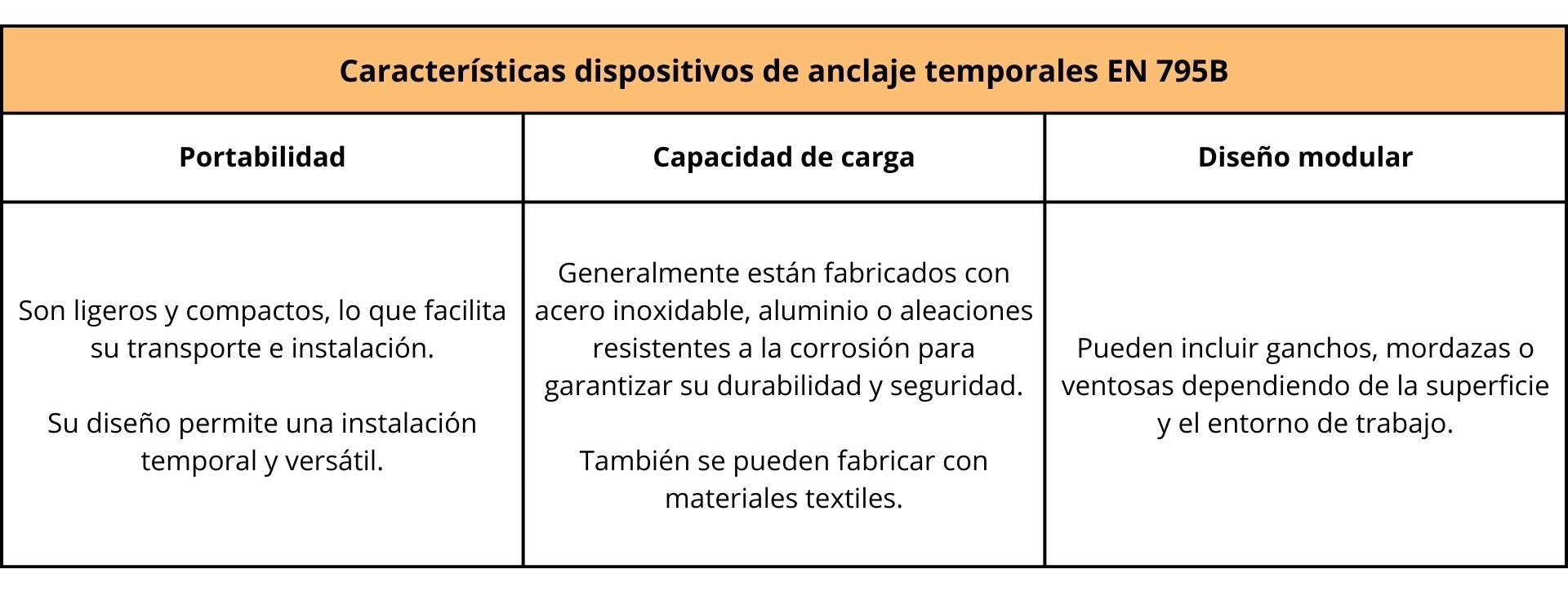
The main characteristics of these devices are:
Regulations for temporary anchor devices
The use of temporary anchor devices is governed by international standards that ensure their safety and performance. Some of the key standards include:
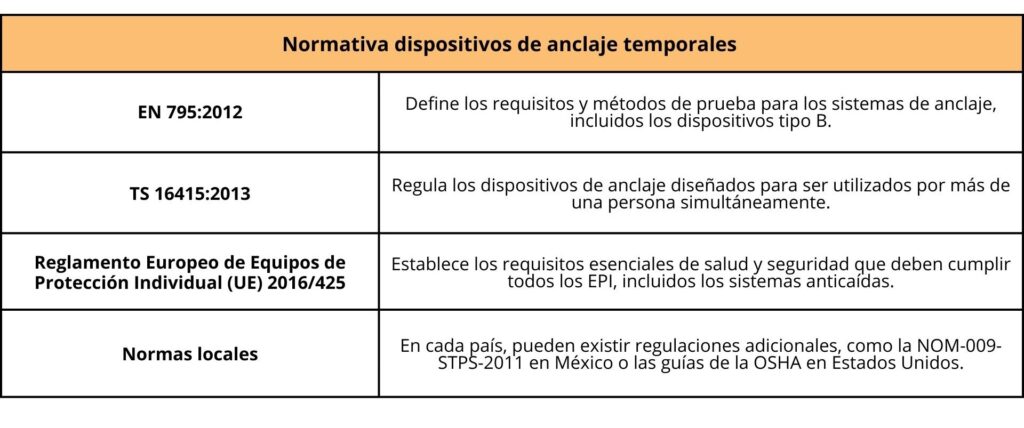
We are going to focus on the UNE EN 795B standard. Personal fall protection equipment. Anchor devices. Class B. From now on we may refer to them as type B devices.
Technical Requirements for Type B Anchor Devices
To ensure safe and effective operation, type B anchor devices must meet certain technical requirements:
- Load capacity: Designed to withstand at least 12 kN, taking into account the forces generated during a fall.
- Compatibility: They must be compatible with the energy absorption systems and other fall arrest equipment used by the user.
- Versatility: Able to adapt to different types of surfaces and structures, such as beams, pipes, or concrete edges.
- Resistance to environmental factors: Materials resistant to corrosion, temperature changes, humidity, and other environmental factors.
- Visual inspection and testing: Equipped with systems or indicators that make it possible to detect deformations, cracks, or other structural damage.
Types of Temporary Anchor Devices
This type of device is widely used for all kinds of work thanks to how convenient it is both to transport and to install. Colloquially, people talk about 3 types of temporary anchor devices covered by the UNE EN 795B standard, classified by their manufacturing material, known as:
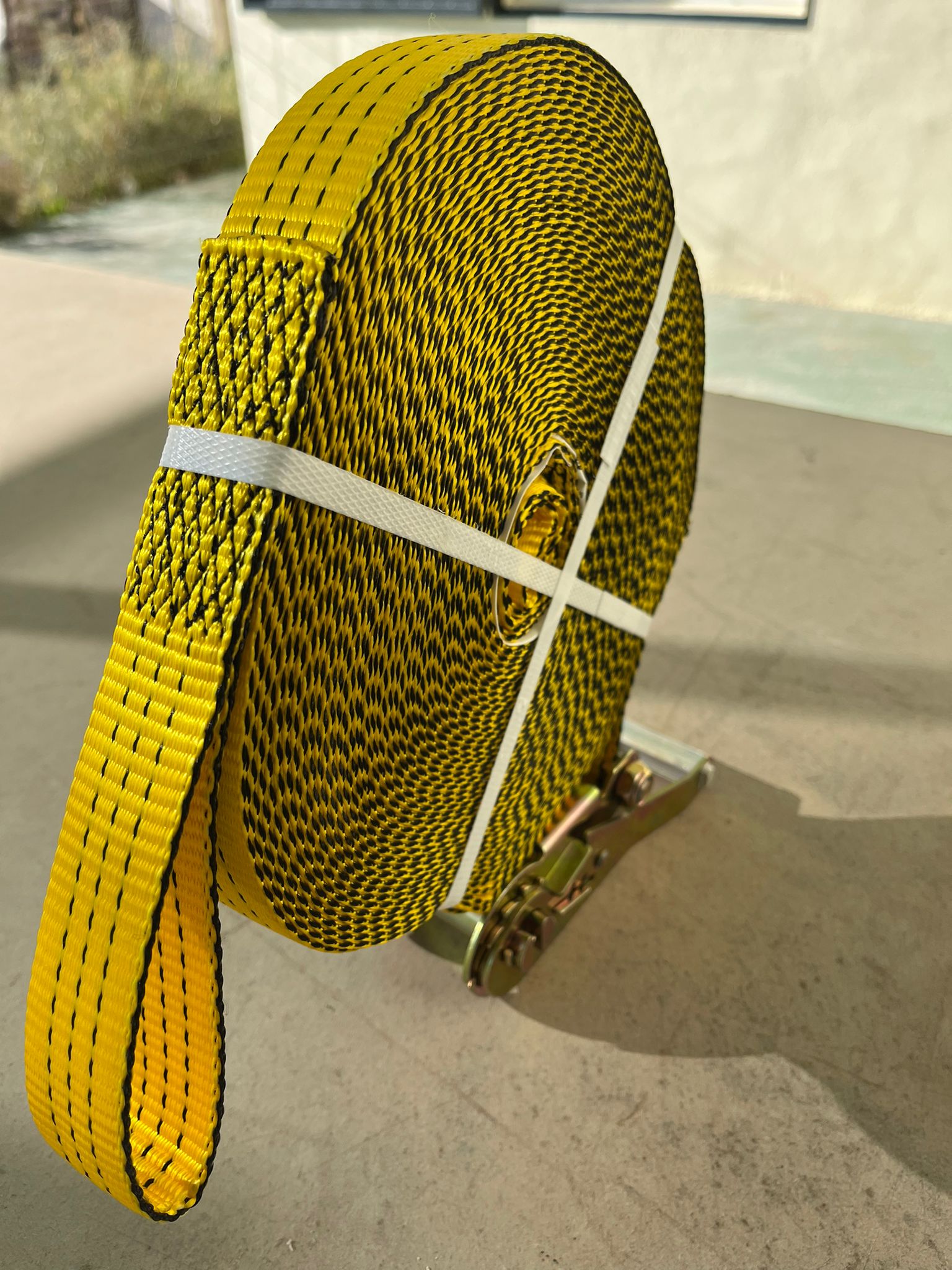
Temporary webbing lifelines
These devices are the most common on the market, offered by most manufacturers and distributors thanks to their wide versatility, low cost, and ease of both installation and use.
They also stand out for their ability to absorb energy efficiently, which significantly reduces the load applied to the end anchors.
Temporary rope lifelines
They are less commonly used than the previous ones. They are made of braided semi-static or static (less common) rope in diameters of 10 to 16 mm.
Temporary cable lifelines
There are few cable models on the market. They are generally used in situations where systems made of textile materials, such as ropes or webbing, are not suitable because of possible exposure to aggressive agents such as abrasives, sharp edges, thermal or solar radiation, and welding sparks.
For their installation, extremely strong anchor structures are essential, capable of withstanding the high loads these cables generate as a result of their very limited energy absorption capacity.
They are also preferred in scenarios that call for more rigid systems, thereby minimizing line deflection in the event of a fall and, as a result, reducing the required clearance.
Besides these three temporary anchor devices, there are others covered by the UNE EN 795B standard, such as rescue tripods.
Which Anchor Device Should I Choose for My Project?
To determine which type B temporary device is best to install, the following variables must be taken into account:
- The place or environment where it will be installed
- The number of users who will use it
- The maximum length we need
- Clear fall distance
- Types of anchors
The last point above is very important because the safety of the system depends to a large extent on the structural anchors available, which must be inspected beforehand and have their strength verified (between 12 kN and 30 kN depending on the model)
Much of the information in this section is specified by the device manufacturer in the instruction manual.
Who Can Install Temporary Anchor Devices?
The installation of type B anchor devices must be carried out by trained and authorized personnel. The requirements for these people include:
- Technical training: Certified courses in work at height and use of PPE, and knowledge of applicable regulations, such as EN 795 and OHS legislation.
- Experience: Familiarity with different anchor systems and working conditions.
- Manufacturer authorization: Some devices require installation to be carried out by personnel certified by the manufacturer.
- Assembly procedure: Personnel installing this type of device must do so following the manufacturer’s instruction manual whenever it is for their own use.
If it is installed for use by third parties, it is recommended that the installation be done by a specialized company given the legal responsibility assumed.
Inspection and Maintenance of Type B Anchor Devices
Proper maintenance is essential to ensure the safety and durability of EN 795B temporary anchor devices.
Periodic visual inspections must be performed before each use to detect signs of wear, corrosion, deformation, or damage, in addition to scheduling detailed inspections every 6 or 12 months, carried out by a qualified technician.
The operation of the fixing and anchoring systems must be verified under controlled conditions. The devices should also be cleaned regularly with non-corrosive products, avoiding the use of aggressive chemical agents.
Ideally, these devices should be stored in a dry place, protected from extreme environmental factors, when not in use.
Repairs:
If repairs are carried out, they must only use original parts and follow the manufacturer’s instructions.
All of these procedures must be recorded in detail: the inspections, repairs, and tests performed.
Important Recommendations for Use
In addition to everything stated above, we believe that to honor the essence of the occupational risk prevention law and seek its integration, it is essential to give a few brief guidelines to the user of the line. Sometimes it is used by the same personnel who assembled it, and on other occasions workers from a third-party company use it and the installer is not there to answer any questions that may arise, which is why every user of a temporary lifeline must:
- Risk assessment: Before installing a type B anchor device, assess the conditions of the workplace, the surface, and the possible loads.
- Load test: Perform an initial load test to confirm the strength of the anchor and the safety of the installation.
- User training: Ensure that workers know the correct use of the device and the associated safety measures.
- Supervision: Supervise operations at height to ensure compliance with regulations and the correct use of the equipment.
Conclusion
EN 795B temporary anchor devices are a key solution for ensuring safety in temporary work at height. Their correct use, installation, and maintenance not only reduce risks but also ensure compliance with current regulations.
Proper training of professionals, together with rigorous supervision, is essential to get the most out of these devices. By following best practices and ensuring a preventive approach, companies and workers can minimize incidents and ensure safer work environments.
We hope this article has given you an idea of type B anchor devices, and as always, if you have any questions, contact our technical department and we will be happy to help you