


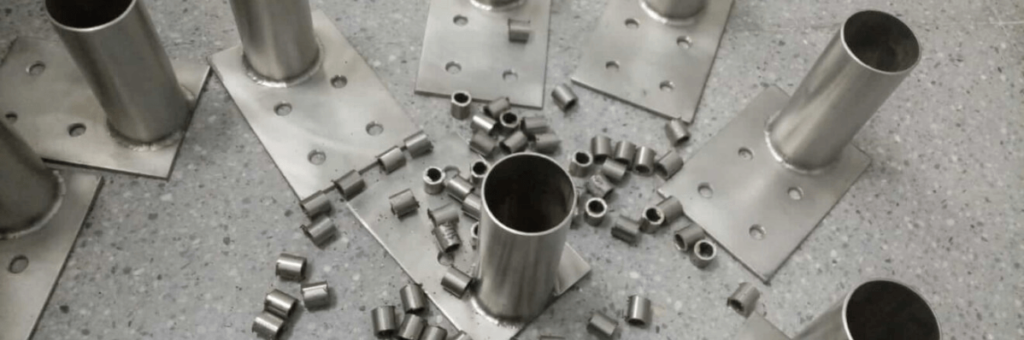
Until now, we have always talked about the different standardized solutions for providing safety and creating access, in compliance with current regulations and with the occupational risk prevention law.
But what happens when those solutions do not provide the necessary functionality? The next post is dedicated to all those special situations that require custom fabrication.
STANDARDIZED SOLUTIONS
To set the scene and better understand the concept of “custom fabrication,” let’s begin by explaining what a standardized solution is.
As the name suggests, these are the safety systems that, in general terms, meet our needs when it comes to ensuring both personal and collective protection. We can find these products on the market easily and quickly, since they are designed to fulfill their functions across the board.
In previous posts we have referred to these types of solutions: our skylight protection nets PIGNUS, edge protection guardrails ANANKE, etc.
All of them can be used in the vast majority of cases. But sometimes there are reasons that prevent or complicate the installation of these or other standard systems, creating the need to develop products that individually solve the specific problem at hand.

Design of Custom Fabrications
Imagine a roof with a certain number of skylights that have not been protected so far. In this situation the solution would be very simple: our PIGNUS systems, which would provide the necessary functionality. But we go up on that roof and find a situation that makes it impossible to install these safety systems because of its special characteristics.
For these cases, we offer special fabrications. These are safety systems designed individually for each situation, for each of the different cases we may encounter, which is why there are endless solutions of this kind.
Steps to Follow in Custom Fabrication
Before design, a series of steps are followed, listed below, and after them the client is offered the best solution with custom safety devices.
- Study of the situation
- Assessment of the elements that prevent the installation of standardized systems
- Design of the different alternatives based on the problems to be solved
Going back to our example, we have a client who needs to protect their skylights against possible falls. This client had previously installed photovoltaic panels on their roof without considering that this would prevent the later installation of any standard system to protect their skylights.
Add to that the problem of removing the photovoltaic panels, both because of lost electricity production and because of the costs and inconvenience involved. In this case, the solution is to develop a system that avoids having to remove the panels while still allowing those translucent panels to be protected.
We come across cases like this every day. Many situations require this type of special fabrication, without which, in many cases, people’s safety could not be guaranteed.

Points to Consider in Custom Fabrication
Once the specially fabricated systems have been designed, we must make sure they comply with current regulations and that it can be demonstrated, through calculation or testing, that they are completely safe. We cannot limit ourselves to simply manufacturing and installing them.
Like any standardized product, custom fabrications must be designed and manufactured under the criteria of the standards that affect our sector and the sectors where these devices will be installed.
At Ypsos, we are able to offer our clients this type of solution, which is so important. We develop these fabrications in compliance with all the relevant standards and justifications, so that people’s safety is never left aside under any circumstances.