


When we introduced the Ypsos Safety brand, we mentioned that it came with four sub-brands. We have already talked about two of them: PIGNUS and ANANKE, and it is time to start introducing our lifelines, which will be called ZOIS.
To do so, we will first explain what a lifeline is, the types that exist, the components, and the standards that govern them.
WHAT IS A LIFELINE?
A lifeline is a safety measure widely used in work at height, confined spaces, and other work involving the risk of falls from more than two meters.
It consists of a rope, cable, or strap that is attached to a strong structure with anchors and extends along the work area, allowing the worker to secure themselves to it with a safety harness and a lanyard system.
The lifeline is essential for ensuring workers’ safety in the event of a fall from height, since they will hang from it and not plunge to the ground.
TYPES OF LIFELINES
There are different types, depending on the type of installation and the material of the lifeline.
Horizontal Lifelines
These are systems designed to allow workers to move horizontally and safely at height. They are used on the roofs of industrial buildings, columns, structures, and other places where freedom of movement is required.
Vertical Lifelines
These are systems that allow workers to climb and descend vertical structures, such as fixed vertical ladders, towers, silos, chimneys, or buildings.
Permanent Lifelines
Depending on the material:
- Rigid lifelines: they consist of a trolley or rail.
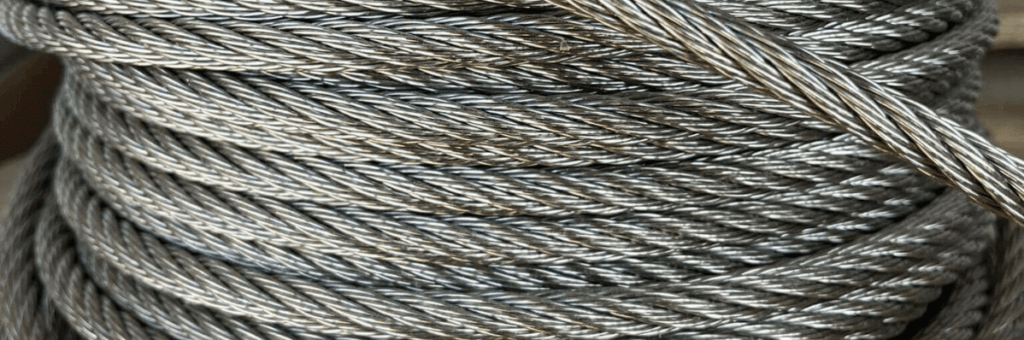
- Flexible lifelines: they are made of a steel cable.
Temporary Lifelines
These are textile systems designed for temporary, quick use while performing specific work at height.

LIFELINE COMPONENTS
A lifeline consists of the following components:
- Anchor: The fixed, secure point from which the lifeline is attached.
- Cable: The line that extends from the anchor and to which the personal restraint equipment is attached.
- Personal Protective Equipment: The set of devices that attach to the lifeline cable to keep the worker upright and prevent accidental detachment; this can be the safety harness.
- Connector: The element that joins the personal restraint equipment to the lifeline.
- Anchor devices: The parts that allow the anchor to be connected to the work point or to the building structure.
- Energy absorption elements: Devices placed on the lifeline so that, in the event of a fall, they absorb part of the energy generated and reduce the impact force.
- Adjustment devices: The elements that allow the length of the lifeline and of the personal restraint equipment to be adjusted to ensure a proper fit.
- Posts and stirrups: Vertical structures used to install the lifeline in places where anchors cannot be used.
LIFELINE STANDARDS
The lifelines mentioned above are governed by two UNE standards, depending on whether the installation is horizontal or vertical.
The UNE-EN 795 standard refers to horizontal fall arrest anchor devices and the UNE-EN 353 standard to guided type fall arresters including a rigid anchor line.
- UNE-EN 795 B – Temporary lifeline.
- UNE-EN 795 C – Flexible horizontal lifeline.
- UNE-EN 795 D – Rigid horizontal lifeline.
- UNE-EN 353.1 – Flexible vertical lifeline.
- UNE-EN 353.2 – Rigid vertical lifeline.