


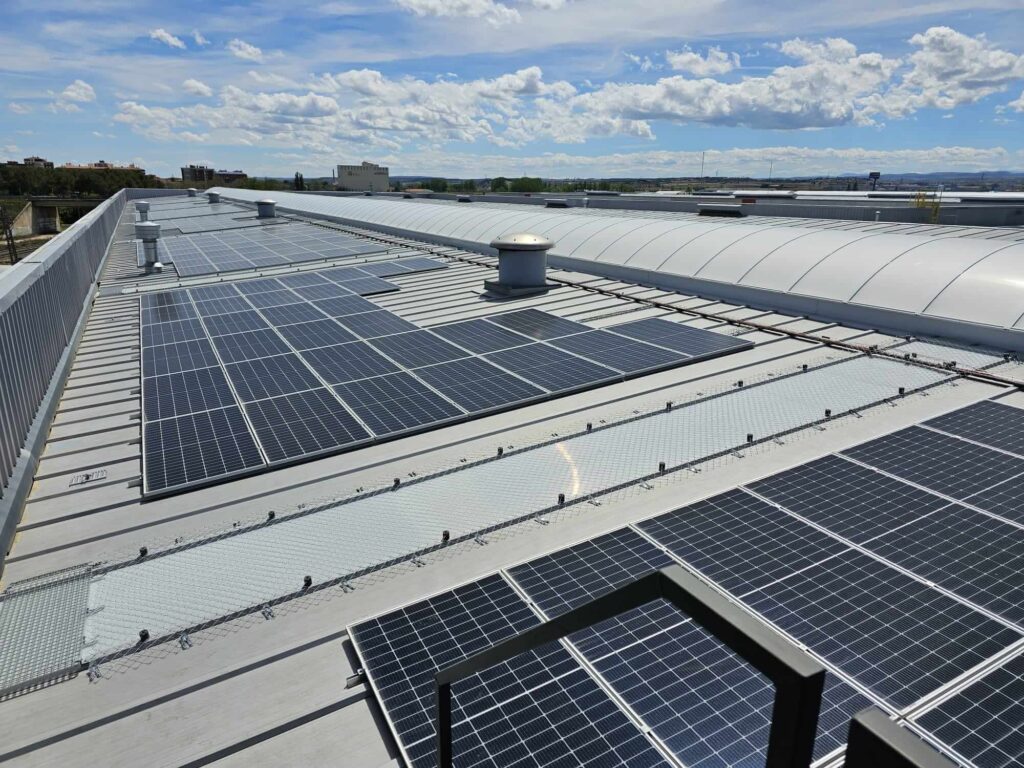
The growing demand for clean energy has led to a significant increase in solar panel installations worldwide.
Photovoltaic panels, as an integral part of this energy revolution, are becoming a popular choice for sustainable electricity generation.
However, installing and maintaining these systems involves risks that must be addressed with photovoltaic installation safety criteria, especially when it comes to work-at-height safety.
Risks on the Roof of an Industrial Building
This time, we will focus on the risks that solar panel installers may encounter on an industrial roof. These risks must be identified and properly managed to ensure the safety of workers and the integrity of the installation.
- Falls from height: one of the main risks on a roof is its height. To address this risk, it is necessary and mandatory to install safety guardrails and lifelines and, of course, for workers to wear the specified personal protective equipment.
- Skylights or domed skylights: the risk of accidents posed by translucent panels must be addressed by installing safety nets or guardrails around the domed skylights so users can move across the roof without danger.
- Slippery surfaces: Roofs can become slippery due to water, oil, or other industrial fluids. Adverse weather conditions can also contribute to slippery surfaces, increasing the risk of falls.
- Exposure to extreme weather conditions: working on the roof exposes workers to extreme weather such as rain, wind, snow, or extreme temperatures. This can affect the stability and safety of the work surface.
- Inadequate maintenance: lack of roof maintenance can lead to a weakened structure, corrosion, and other structural problems that increase the risk of collapse or accidents.
- Unprotected obstacles and equipment: obstacles, equipment, or unprotected edges can pose an additional risk. Workers may trip or fall if proper safety measures are not taken. To address this, crossovers or access platforms can be installed.
- Electrical installations: electrical equipment on the roof can increase the risk of electric shock if proper precautions are not taken. In addition, poorly managed electrical cables can increase the risk of tripping and falling.
There are many risks that can be found on an industrial roof; these are only some of them. When installing solar panels, we must take them into account and manage them before the worker gets onto the roof.
Work-at-Height Safety for Installing Solar Panels
Of all the risks mentioned above, we will focus on the risk of falling to a lower level from an industrial roof.
Before installing the photovoltaic panels, the roof must be inspected to see whether work-at-height safety systems are already in place.
If there are none, a fall protection project must be planned according to the client’s needs.
The most common approach is to install lifelines, first the temporary one and then the permanent one, so that when the solar panels need maintenance, the safety system is already in place.
We also have to consider whether there are skylights or domed skylights. In that case, we would need to mark the area and install welded wire mesh safety nets, metal trays, or guardrails; one safety system or another will be installed depending on the needs of the client and the roof.
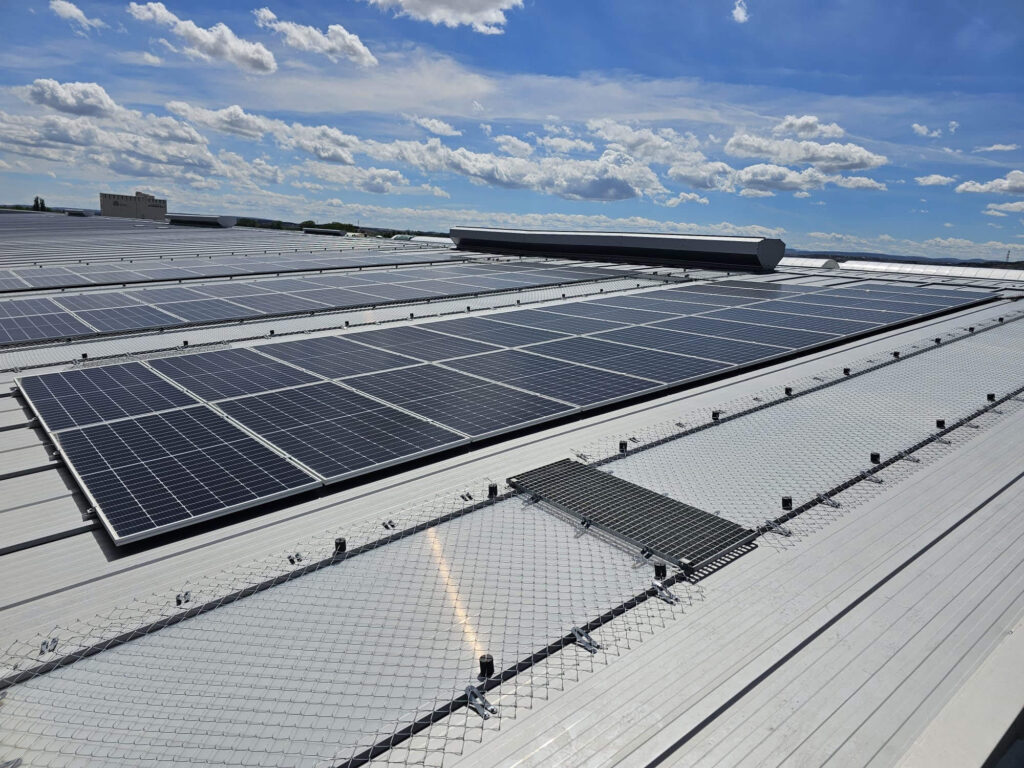
The most recommended safety system under the regulations is safety guardrails, since, as collective protection, they ensure users’ safety and eliminate the risk of falling.
In addition to these safety systems, every worker is required to wear their personal protective equipment. They must be properly equipped with a safety harness, a lanyard with an energy absorber, a helmet, gloves, carabiners, and so on.
Work-at-height safety during solar panel installation is essential to protect workers and ensure the project’s efficiency. By adopting preventive measures and following safety protocols, the risks associated with work at height can be minimized.
Conclusion
Companies that prioritize work-at-height safety demonstrate a commitment to social responsibility and to the well-being of their employees. This helps build a positive image and reputation among workers as well as among clients and the community at large.
In addition, workplace accidents can be costly in terms of medical care, workers’ compensation, and lost productivity. Work-at-height safety helps prevent these incidents, which translates into significant savings for companies.
In short, using work-at-height safety measures during solar panel installation is not only a legal obligation but also a fundamental practice for protecting workers, ensuring project efficiency, and building a solid reputation in the business world.