


PPE, or personal protective equipment, is a key element in any work-at-height protocol, as it ensures workers’ safety and prevents workplace accidents. Its use is mandatory in many sectors of the energy industry, including wind turbine safety and wind industry rope access work, where work-at-height conditions present especially high risks.
In this post, we analyze them and look into the specific PPE for work at height, from safety harnesses to retractable fall arresters.
What Is PPE?
Personal protective equipment is any equipment intended to be worn or held by the worker to protect them from one or more risks that may threaten their safety or health at work.
It is classified into 3 categories depending on the severity of the work to be performed.
- Category I: Minimal workplace risks, such as a reflective vest or gardening gloves.
- Category II: Medium workplace risks, such as hearing protectors.
- Category III: Serious workplace risks that are life-threatening, such as full chemical protection suits.
Personal protective equipment intended for work at height falls into PPE category III.
This is because, if a fall from height were to occur and the individual is not wearing the necessary safety equipment, the consequences can be death or irreversible injury.
PPE for Work at Height
To work at height safely and protect workers’ health, they must wear a series of necessary PPE.
This equipment is essential for ensuring the safety of employees working in construction, maintenance, telecommunications, and other sectors where tasks are performed at height.
Safety Harness
A restraint device that fits the worker’s body and is designed to arrest a fall safely.
It must be properly adjusted to provide the necessary support and minimize the risk of injury in the event of a fall.
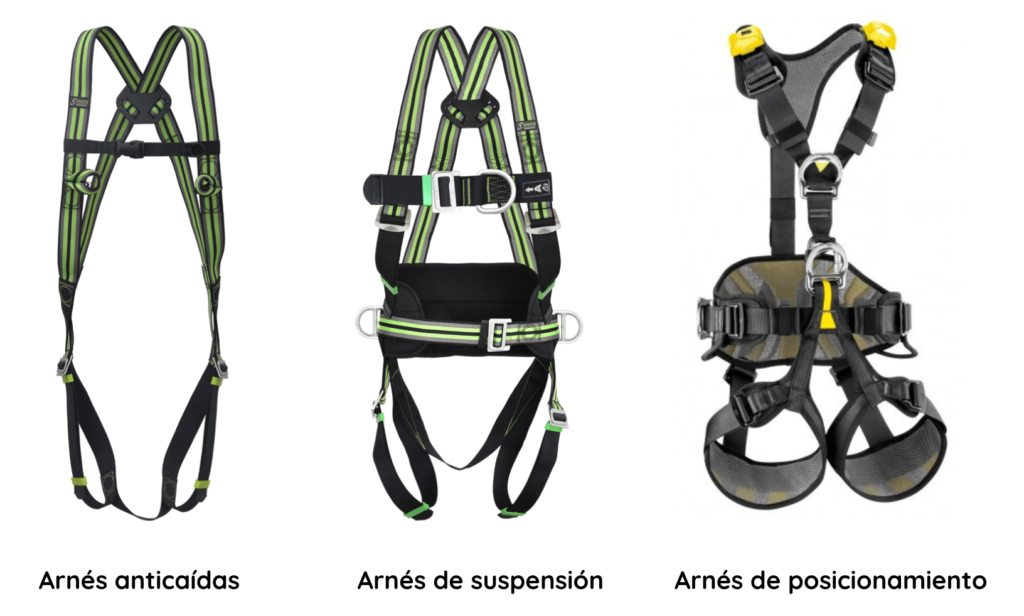
Safety harnesses for work at height can be of three types:
- Fall arrest harness, under the EN 361 standard.
- Suspension harness, governed by the EN 361 and EN 358 standards.
- Positioning harness, which must comply with the European standards EN 361, EN 358, and EN 813.
Safety Helmet
Helmets designed to protect the worker’s head and that include a strap (chin strap) to keep the helmet from falling off during a fall. It offers protection against impacts and falling objects.
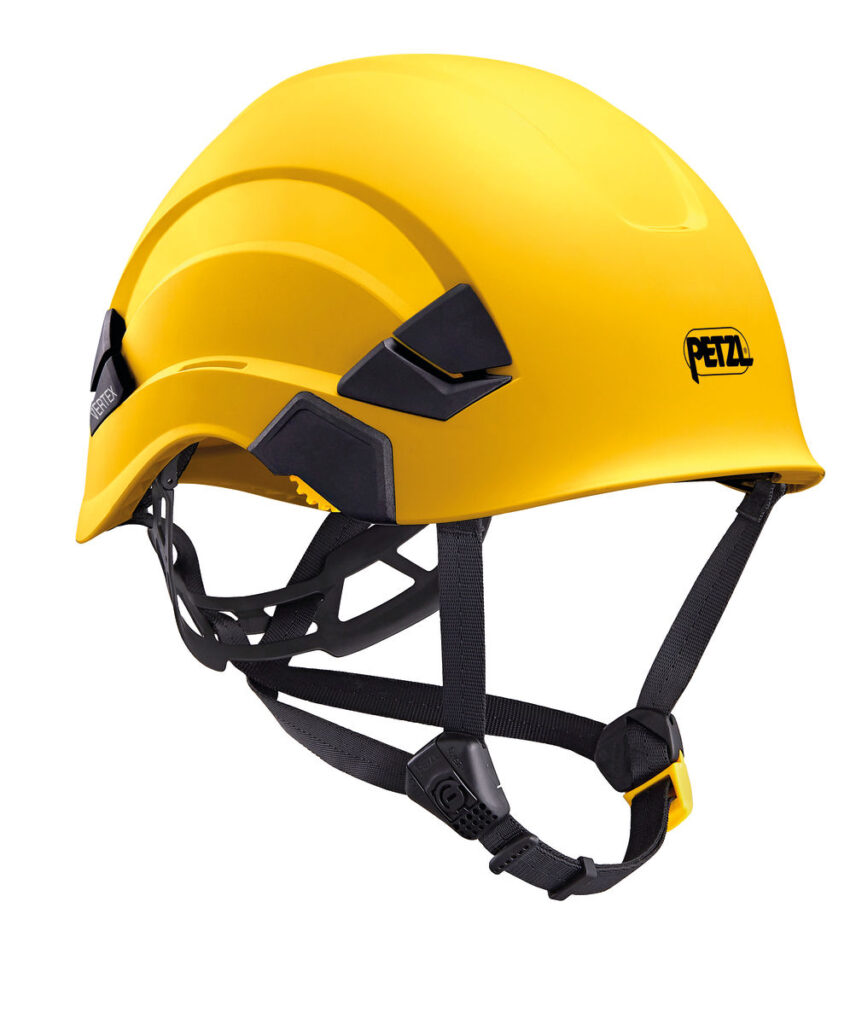
The helmet we offer in our online store complies with the following standards:
- UNE-EN 12492:2012. Mountaineering equipment. Helmets for mountaineers. Safety requirements and test methods.
- UNE-EN 50365. Electrically insulating helmets for use on low voltage installations.
- UNE-EN 397. Industrial safety helmets.
It can be used for work at height, rope access, rescue, and sports activities such as mountaineering. It is also dielectric.
Connecting Elements
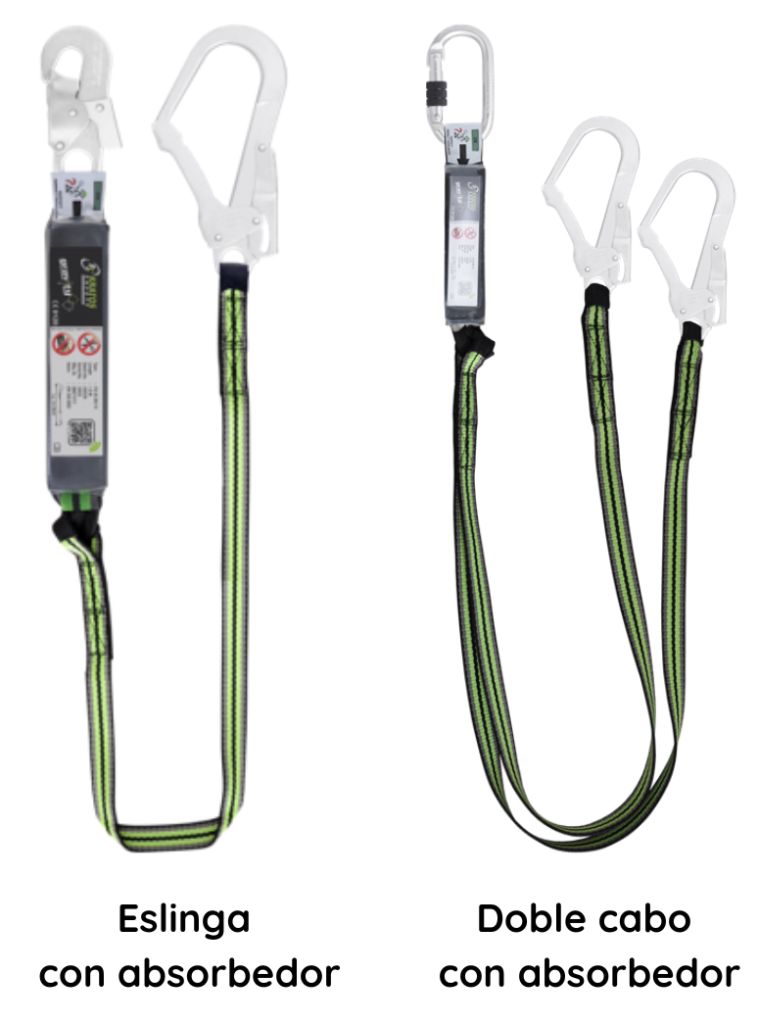
Lanyards connect to the harness and to the anchor points. They provide a secure connection between the worker and the anchor system.
This group includes slings or lanyards, governed by the EN 354 and EN 355 standards, depending on whether or not they have a built-in energy absorber.
These connecting elements come with a single leg, two legs, or none.
Carabiners
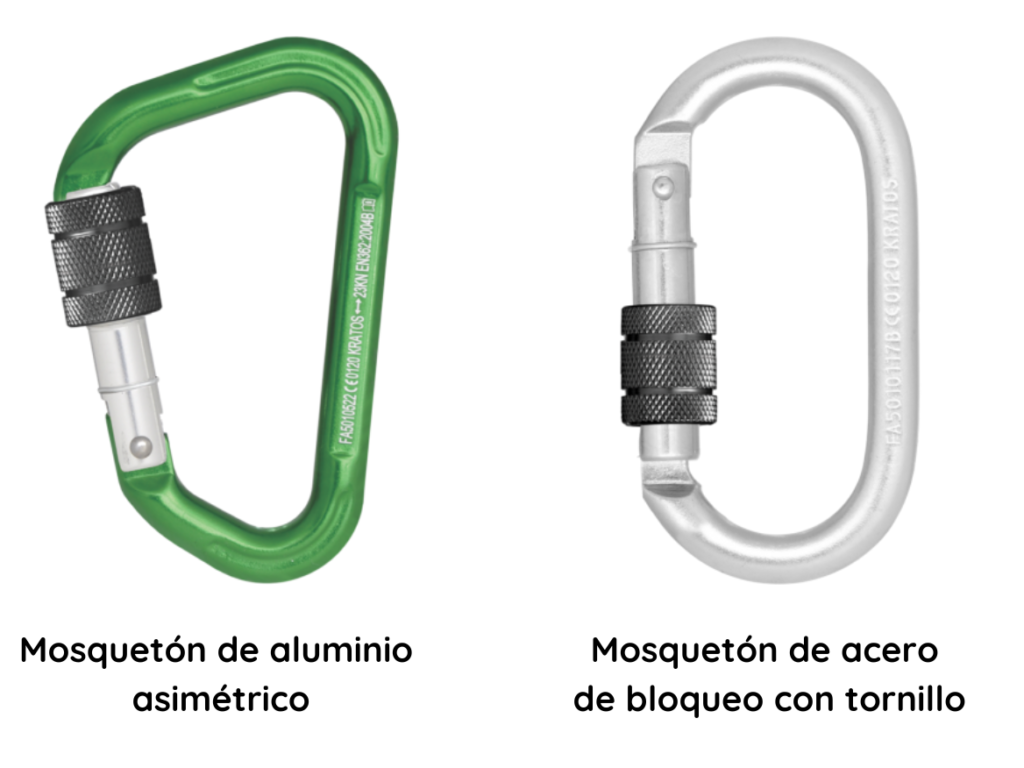
These safety elements are used to securely connect harnesses, lifelines, fall arrest devices, and anchor points. They are usually made of aluminum or steel and come in different shapes.
Connectors have different locking systems:
- Manual locking (screw gate): Requires the user to turn a nut to secure the closure.
- Automatic locking: Includes double or triple locking systems that close automatically.
- Snap-hook closure: Easy to operate, although less safe for certain applications than automatic locking.
Carabiners and fall arrest connectors are a fundamental part of protective equipment for work at height and comply with the UNE EN 362 standard.
Retractable Fall Arrester
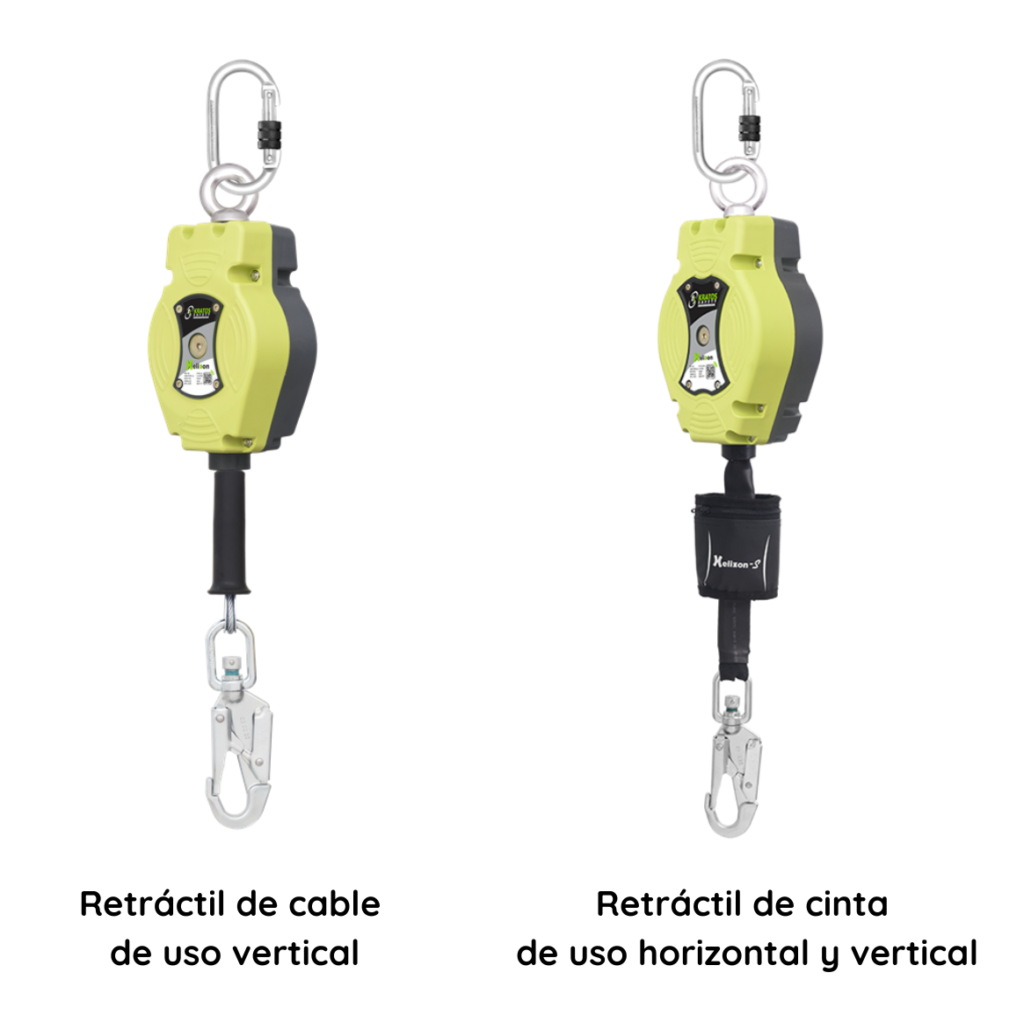
Equipment that connects to the harness and to an anchor point, designed to brake and arrest a fall. They offer greater freedom of movement and retract automatically to reduce the fall distance.
Retractable fall arresters can be webbing or cable type, with the energy absorber inside the housing or outside it.
These fall arrest devices can always be used vertically, and some may incorporate and specify that they can also be used horizontally.
We must remember and emphasize that the proper use of the personal protective equipment we have mentioned is essential for ensuring the safety and health of workers in a variety of work environments.
In addition, both the employer and the worker are responsible for ensuring that the equipment is used correctly and kept in good condition.
The absence of PPE and safety systems in work at height can, in the event of an accident, have irreversible health consequences for workers.