


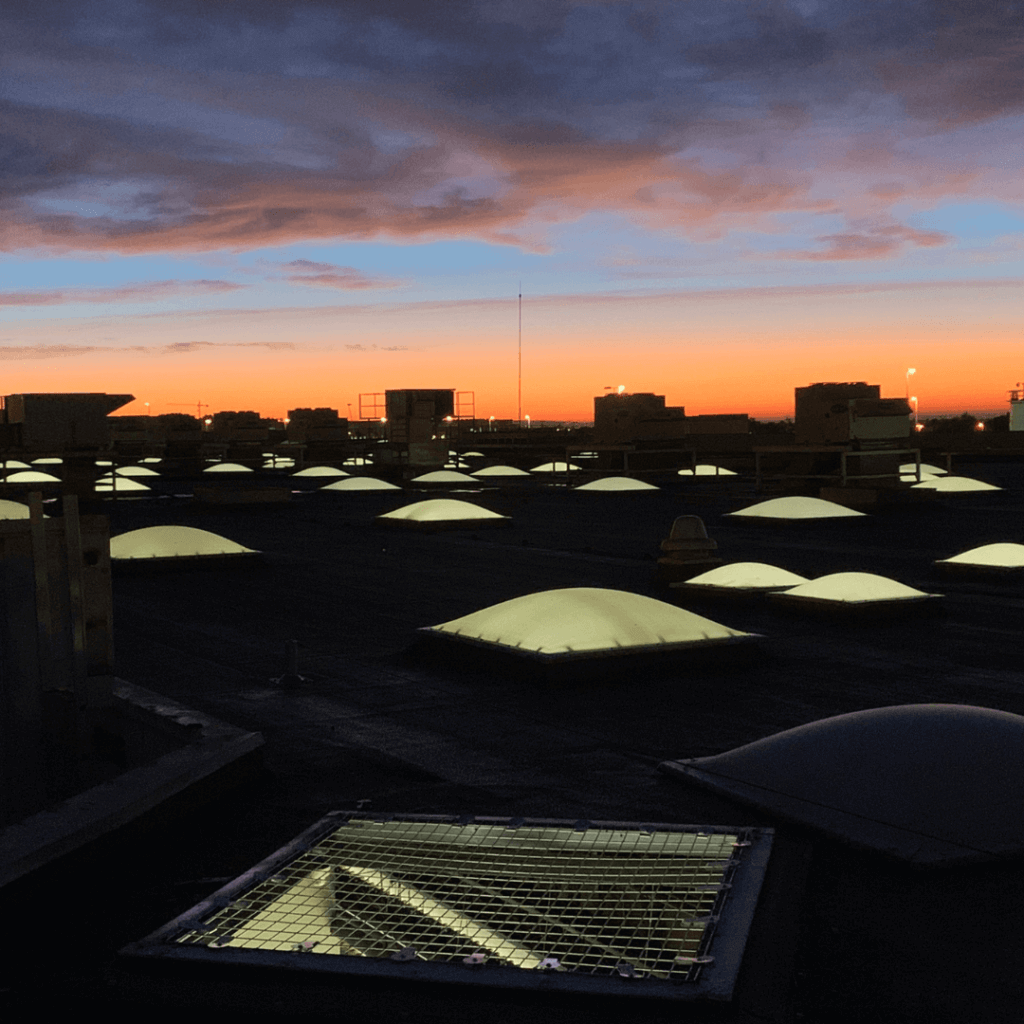
Skylights and translucent panels are increasingly common on roofs, whether on industrial buildings, offices, or even other buildings. The reason is to make the most of sunlight to light the interior and save energy.
But these areas become critical risk points when working at height, and in this article we will see why.
What Is a Fragile Roof?
A fragile (or non-walkable) roof is one where sufficient strength to support the weight of a person cannot be guaranteed, for example:
- Skylight
- Dome skylight
- Aged fiber cement
- Areas damaged by time or weather (such as hail)
One of the problems is that these areas are not necessarily identifiable at a glance, since over time they can take on the same color as the rest of the roof.
Risks Associated with Fragile Roofs
Working on a roof involves risks inherent to work at height; when the roof also has fragile or non-walkable areas, the danger increases due to factors such as the surface breaking or a false sense of security.
Types of Solutions Depending on How the Fragile Roof Is Used
As we have seen in other articles, each project requires different protection at height; the same is true for fragile roofs.
To that end, we will divide them into two groups:
Fragile Roofs That Are Not Walkable
Areas where, although there are translucent panels or skylights, no one needs to walk on them or cross them, and therefore we will need passive protection.
In this case we can install fall arrest safety nets; these are installed either over the skylights —so that they also serve to mark the area— or underneath, as is the case, for example, with dome skylights.
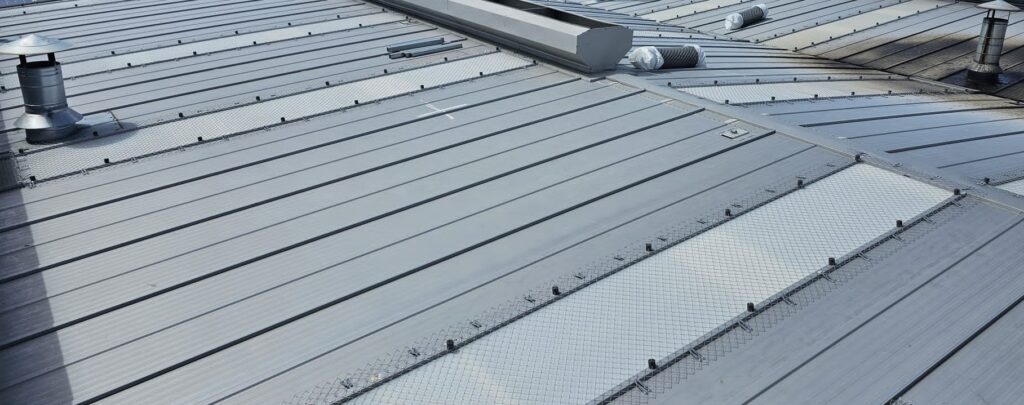
What are they for?
- Permanent protection
- Do not depend on any action by the worker
- Integrated into the roof
Fragile Roofs That Are Walkable
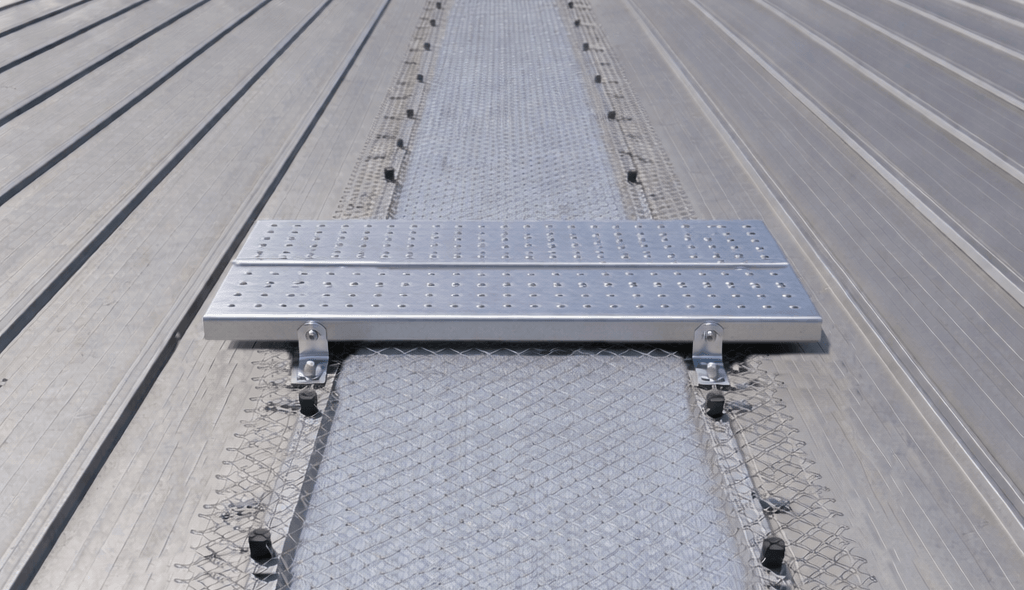
On some roofs, maintenance work requires walking over the skylights; in this case we need to create safe routes, and for that we will use other types of protection, such as roof walkways.
What are they for?
- Distribute weight safely
- Permanent, collective protection
- Reduce the risk of human error
Combining Systems
Sometimes fall arrest systems are combined to ensure a safer environment, so we may come across fragile roofs with a fall arrest net covering the skylight and a roof walkway on top of it.
We can also see roof walkways with lifelines anchored to the roof, or even guardrails, to create walkways over the translucent panels.
Benefits of Implementing Fall Arrest Systems on Roofs
Ensuring safety on a roof is not just a technical or regulatory matter; it is a responsibility toward the workers who will have to go up on it.
Implementing systems such as safety nets, roof walkways, or guardrails helps protect workers, comply with occupational health and safety requirements, and also makes future roof maintenance easier.
Therefore, although not all roofs are designed to be walked on, all of them must be able to be maintained safely, and for that it is necessary to have high-quality, tested, and certified fall arrest systems and devices.