


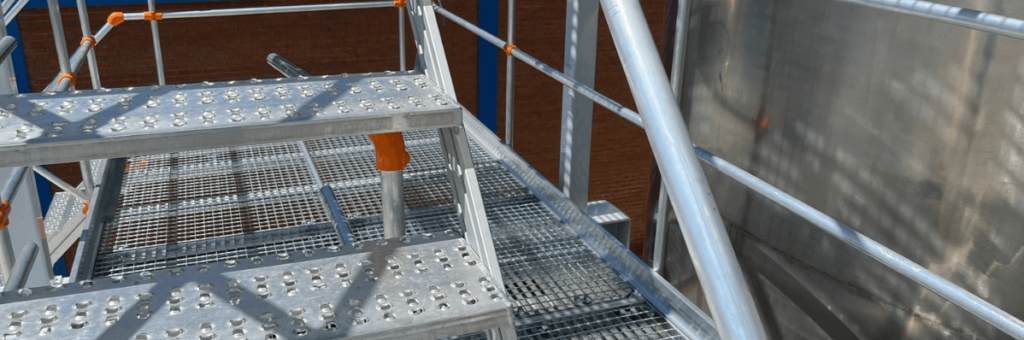
Access ladders are very important elements when designing a safe work environment, since they facilitate mobility and access to different areas, in addition to playing a major role in occupational risk prevention.
But where should these safety systems be installed, and what are the reasons for doing so? In the following post, we will discuss all of this.
UNE EN ISO 14122 Standard
The UNE-EN ISO 14122 standard establishes the technical and safety requirements for permanent access to machinery and industrial installations.
Divided into four parts, it governs the different means of access, such as walkways, platforms, and fixed ladders, ensuring that they meet the safety standards necessary to minimize occupational risks.
This standard not only protects us legally against accidents that may arise from work, it is also an accident prevention measure, ensuring a safe work environment.
Where Can Access Ladders Be Installed?
The UNE EN ISO 14122 standard states that any access to machines, industrial equipment, or elevated work areas must have a safe means of access to ensure that workers can climb up and down without risk to themselves.
That is why these access ladders are commonly found in the following cases:
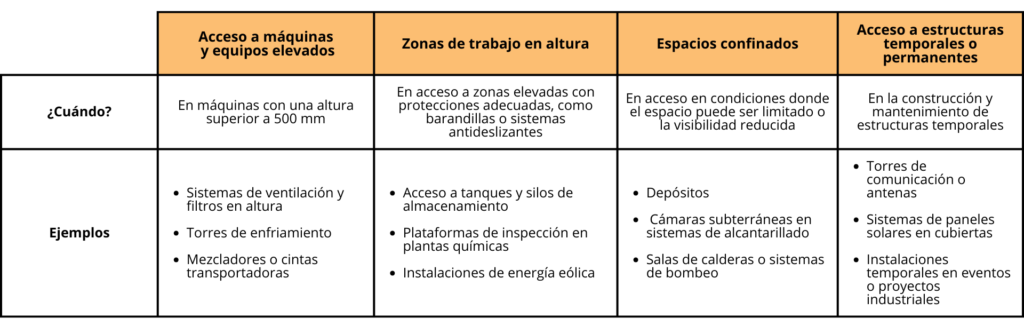
Access to Machines and Elevated Equipment
In many types of industry there are machines that must be accessible for maintenance, inspections, and checks, so the workers or maintenance staff in charge must access them frequently.
In these cases we will install a fixed ladder with a guardrail to prevent operators from falling while performing these tasks; within the standard mentioned above, we will find the technical and design specifications for these systems to ensure safety.
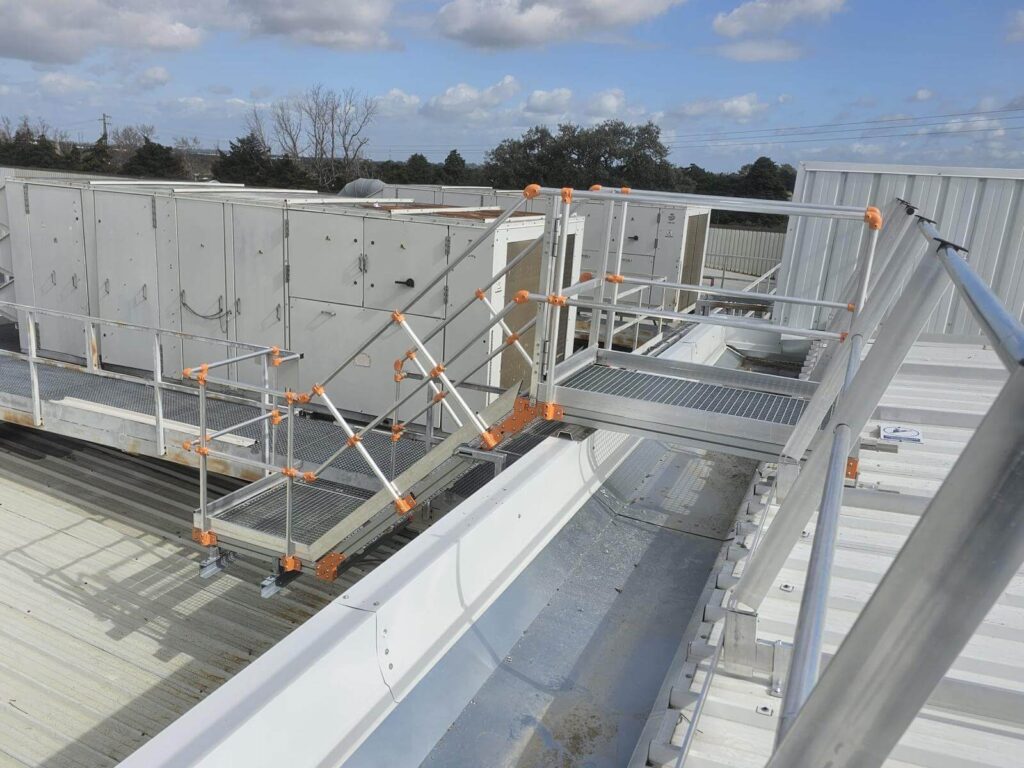
Accessible Roofs
In both industrial buildings and private roofs of buildings or single-family homes, it is sometimes necessary to perform maintenance on:
- Ventilation systems.
- HVAC units.
- Solar panels.
- Pipes or power lines.
For this reason, when these tasks are performed frequently, vertical or fixed ladders will be installed; these structures help prevent falls and allow authorized personnel to access safely to carry out this maintenance.
Confined Spaces
Access to confined spaces, such as pits, wells, or underground tanks, is another area where ladders governed by the UNE-EN ISO 14122 standard are essential.
In these cases, ladders must ensure quick, safe access in conditions where space may be limited or visibility reduced. They must also provide an emergency exit in the event of dangerous situations.
Access to Elevated Structures
Many facilities have silos or elevated structures that require safe access; in these cases, the standard specifies that access will be provided by vertical ladders fitted with fall arrest protection systems such as vertical lifelines.
In sectors such as:
- Energy
- Water
- Telecommunications
- Practical examples:
- Communication towers or antennas
- Solar panel systems on roofs
- Temporary installations at events or industrial projects
Height Differences Between Roofs or Work Areas
If there are level differences within industrial areas, access to machines, or between roofs, the standard recommends installing ladders, which may be fixed or vertical, depending on the available space.
If use is frequent, we will opt for fixed ladders, whereas if use is infrequent, we can resort to vertical ladders, commonly known as ladder cages or caged ladders.
Key Factors in Installing Access Ladders
To comply with the UNE-EN ISO 14122 standard, it is essential to consider several aspects in the design and installation of access ladders:
1. Height and angle of inclination
The regulations recommend different types of ladders depending on the height and the angle of access:
- Inclined ladders (45° to 75°): ideal for frequent access.
- Vertical ladders (>75°): suitable for occasional access and confined spaces.
2. Materials and strength
Ladders must be made of corrosion-resistant materials, especially in industrial environments with exposure to chemicals or extreme weather conditions.
3. Protection systems
- Guardrails on both sides to prevent falls.
- Non-slip steps to minimize the risk of slipping.
- Harness and lifelines in the case of vertical ladders or significant heights.
4. Additional standards
In addition to UNE-EN ISO 14122, it is important to comply with other local or sector-specific regulations, such as the Industrial Installations Regulation or the specific OHS regulations of each country.
Benefits of Complying with the UNE-EN ISO 14122 Standard
Following the criteria of the UNE EN ISO 14122 standard brings a number of benefits; sometimes we give only legal importance to this type of regulation, but we can find other important aspects, such as:
- Prevention of workplace accidents.
- Legal compliance and fewer penalties.
- Greater efficiency and productivity.
- Cost savings on repairs or replacements.
- Business reputation.
Conclusion
To reduce accidents and create safe access, we will turn to installing ladders, whether fixed or vertical. For this, we will use the guidelines of the UNE EN ISO 14122 standard as a reference.
It should be remembered that installing safety ladders not only spares us legal penalties, but also prevents accidents and improves operations in companies by creating easier access.
If you have any doubts about your project or specific situation, we recommend turning to duly qualified personnel; they can carry out a risk assessment tailored to your particular needs and recommend the best system to address your company’s specific situation, always following the recommendations of the manufacturers of these structures.
Thanks to these safety systems we create efficient and safe work environments, which will help us save lives.