


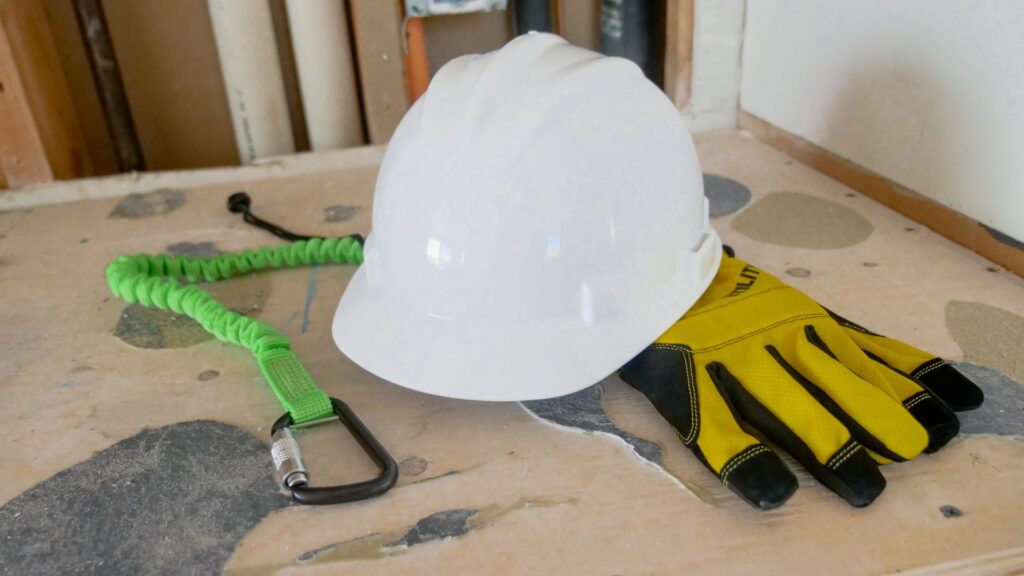
Personal protective equipment (PPE) is a key element of occupational safety, especially in sectors where workers are exposed to considerable risks, such as work at height.
These devices are crucial for preventing accidents and minimizing harm if they do occur. In this context, inspection and maintenance of PPE is essential to ensure that it works properly and to protect the worker’s safety.
Importance of PPE Inspection
Inspecting PPE is not just a recommended practice but a legal obligation in most countries. In Spain, the regulations require PPE to be used in good condition and to receive regular maintenance and inspections.
Protective equipment for work at height must be inspected both before first use and periodically throughout its service life. This inspection ensures that the equipment has no damage that could compromise its effectiveness.
Inspecting Safety Harnesses
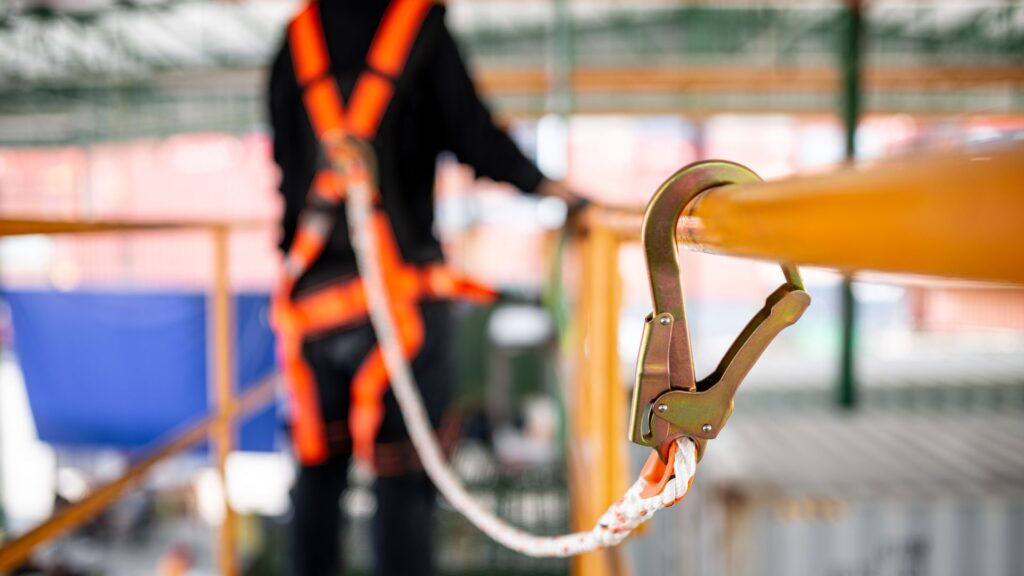
The safety harness is one of the most important elements in protection against falls to a lower level. Inspecting a safety harness must be meticulous and must follow specific guidelines
Visual inspection of the safety harness
Visual inspection involves a thorough check of the safety harness components (webbing, straps, stitching, and metal parts) looking for defects or tears.
For example, the webbing may show burns or wear from use that could weaken the harness, or the buckles may show some sign of corrosion that would compromise the harness structure in the event of a fall.
Functional test of the safety harness
Once the visual inspection is complete, we move on to what we call functional tests. During this process we check whether the harness still works properly in terms of fit and flexibility.
We also check the position of the adjustment buckles and the rings used to connect to the fall arrest system or for positioning.
Documentation review of the safety harness
It is important to make sure that the safety harness being inspected has its corresponding documentation, since at each inspection the date of manufacture and the service life specified by the manufacturer must be verified. This is because if it has reached its expiration date, this PPE will be declared “Not Fit for Use” even if it shows no sign of deterioration.
We must therefore have a document with the history of the inspections carried out on the PPE.
Inspecting Carabiners
Carabiners are quick-connect devices used to join the harness to other elements of the fall protection system, such as lifelines. Given their crucial function, carabiners must be inspected with particular attention.
Visual inspection of carabiners
When visually inspecting carabiners, we must check that the body is in good condition, that is, with no cracks, corrosion, or deformation, since these would compromise its strength.
In addition, special attention must be paid to the opening and closing of the gate, as it must work properly; a closing failure would compromise its operation and therefore the worker’s safety.
Functional test of carabiners
The main functional test to be performed on a carabiner is the closing and opening test, which must work properly.
And although load testing is not usually performed during routine inspection, it is important to make sure the carabiner has not previously been subjected to overloads, which may be evident from deformation or damage to the structure.
Documentation review of carabiners
Verify that the carabiner complies with the applicable regulations and standards; in Spain, the UNE EN-362 standard.
Inspecting Safety Helmets
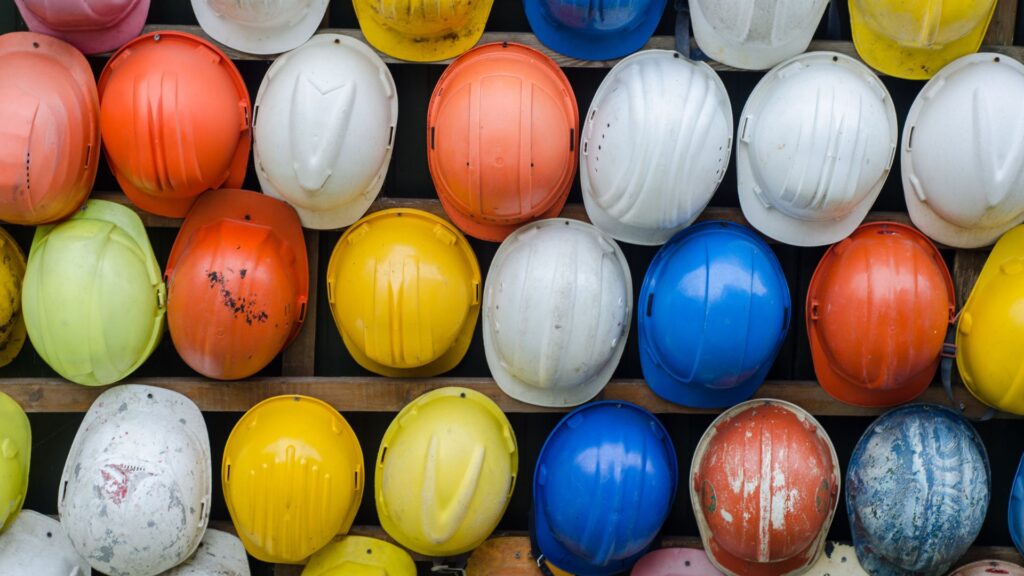
The helmet is another essential element of protection in work at height, since it protects the head from impacts and falling objects, which can save lives in the event of accidents.
Inspection of the safety helmet must focus on both the helmet structure and its internal components, as well as its adjustment elements.
Visual inspection of the safety helmet
In the case of safety helmets, visual inspection consists of looking in detail at the different parts of the helmet, specifically:
- The outer shell, for any cracks, dents, or deformation
- The internal cushioning system, which must be in good condition so that it works properly in the event of a fall
- The chin strap, since this component is mandatory for work at height and, as such, must be in good condition
Functional test of the safety helmet
Check that the helmet fits firmly and stably on the worker’s head and that the retention straps secure the helmet properly without loosening during use.
Documentation review of the safety helmet
It is essential to verify the helmet’s date of manufacture and service life, since a helmet that has exceeded its service life or expiration date may not offer the same protection as a new one, even if it shows no visible damage.
In addition, for work at height, make sure the helmet complies with the necessary safety standards.
Inspecting Retractable Fall Arresters
Retractable fall arrest systems are devices that allow the worker to move freely but lock automatically in the event of a fall, limiting the fall distance and reducing the impact force. These systems are vital in fall protection and their inspection must be exhaustive.
Visual inspection of retractable fall arresters
When visually inspecting retractable fall arresters, we must look at their components, namely:
- Webbing or cable, depending on the type of retractable; we must check that it has no cuts, wear, corrosion, or deformation.
- Housing, which must be in good condition, with no dents or cracks.
- Metal parts, free of corrosion and damage.
Functional test of retractable fall arresters
Check that the retractable fall arrester works properly. This is done through two tests:
- Automatic locking: pull out a small amount of the cable and test by pulling sharply; the PPE must lock immediately and release the webbing in a controlled manner once the tension is relieved.
- Retraction of the webbing or cable: when not in use, it must retract without hanging loose.
Documentation review of retractable fall arresters
A detailed record must be kept of all inspections, repairs, and maintenance performed on the retractable system. In addition, make sure the system complies with the regulations in force, in this case UNE EN-360.
What Can Happen If PPE Is Not Inspected?
Failing to inspect PPE can have different consequences, from a fine to a serious accident, since, for example, an unfit and uninspected harness can be the difference between a minor accident and a tragedy.
Falls from a height are one of the leading causes of workplace deaths, and many of them could be avoided with proper inspection and maintenance of protective equipment.
Regular inspection of PPE, particularly for work at height, is an unavoidable responsibility for ensuring workers’ safety.